
In the past week, the temperatures started dropping from full-bore Summer swelter, cooling a degree here or there, until suddenly it seems to have become Autumn. The nights are cold, and the mornings are crisp. We’ve had intermittent rain, and lots of vey dramatic clouds.
In past years, the end of August and the beginning of September was when Mont Royal Park put on a fungal fantasia. There are a lot of species here that are not familiar to this Southern Californian! All the species labels here are according to the “Seek” app and/or Google Lens, so should not be considered particularly accurate.
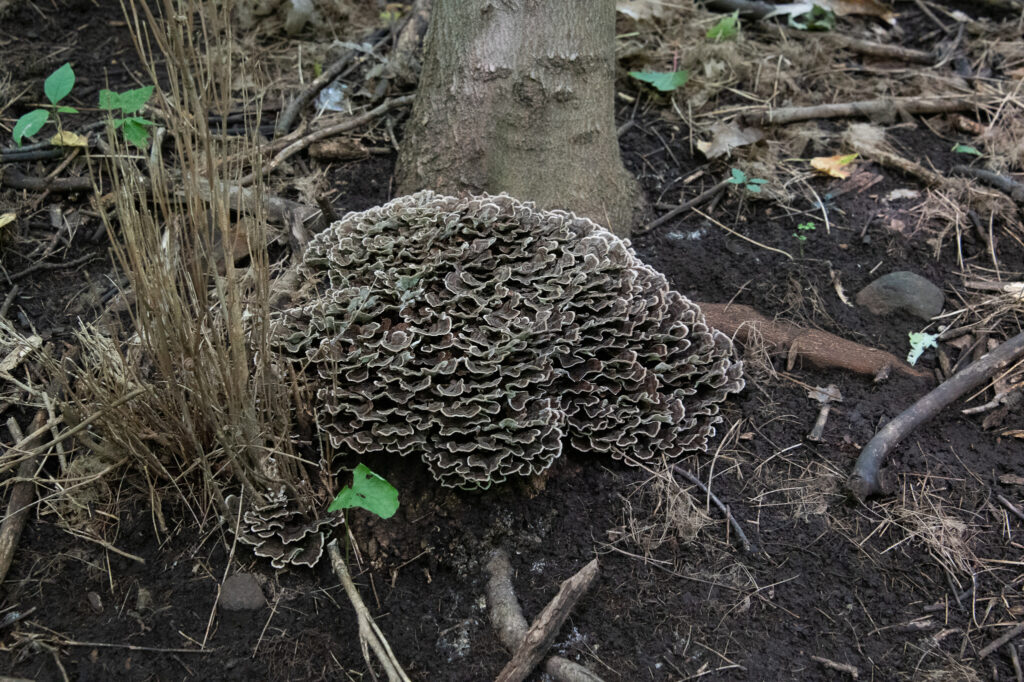
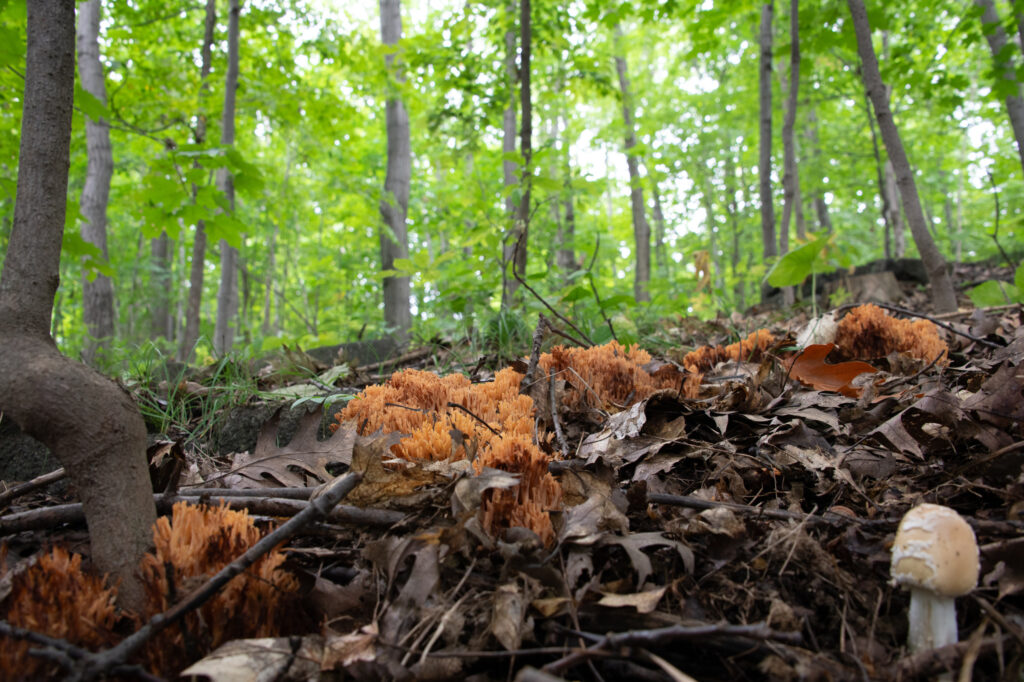
Some are notable for their size (like this Turkey Tail that was easily 2ft / 0.6m across), others for their color like these fancy Coral mushrooms.
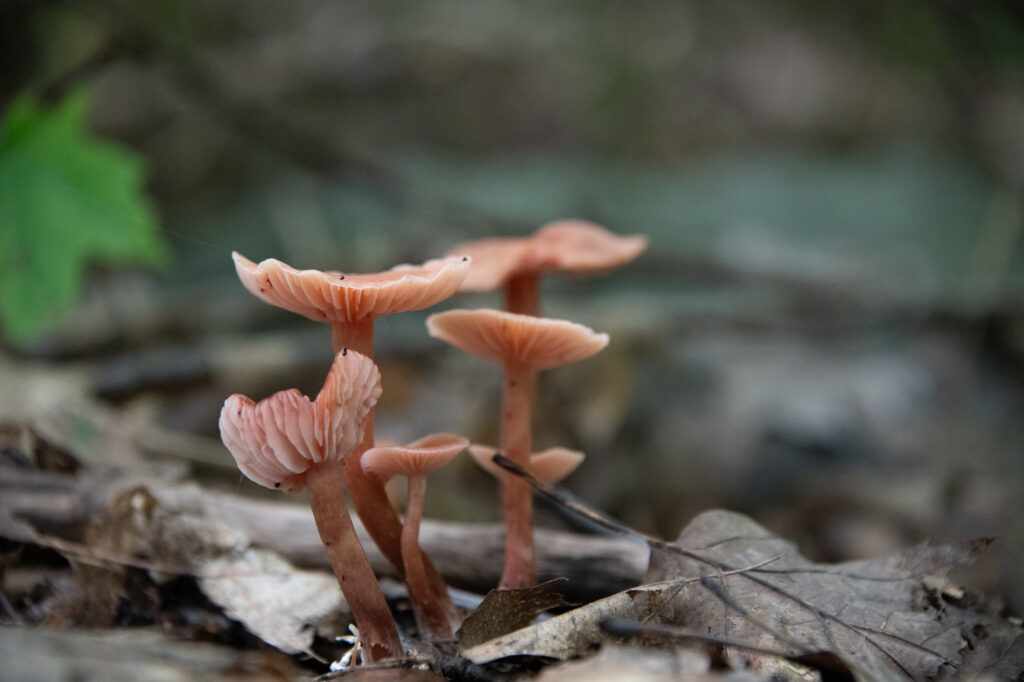
These had a very subtle color.
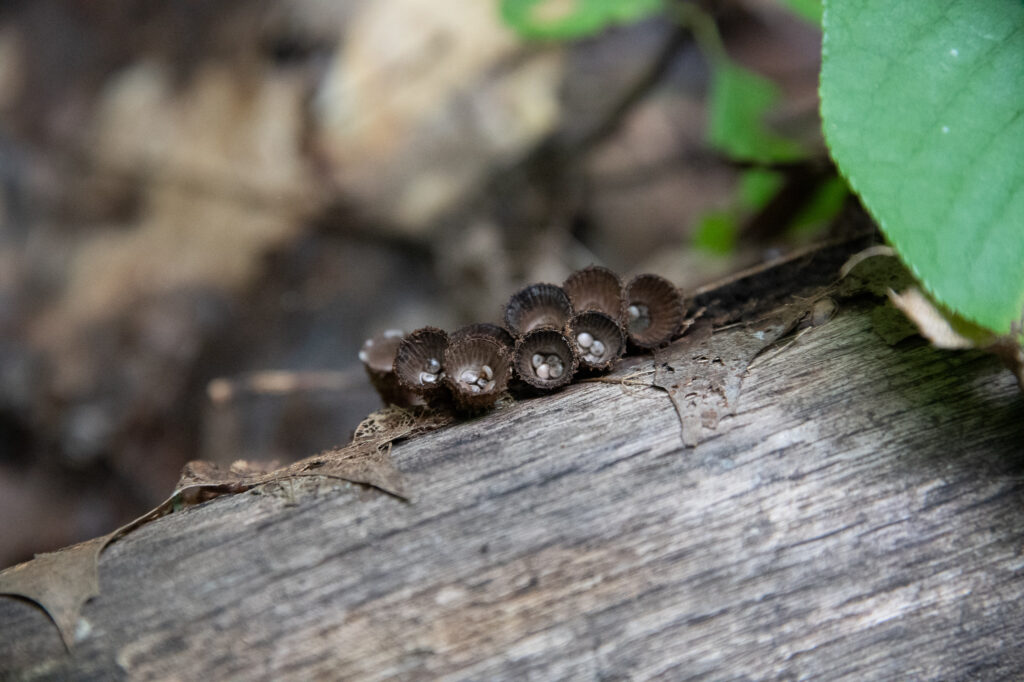
I’d read about the Bird’s Nest fungus, but thought that the “eggs” were an embellishment until I saw them for myself. These are pretty small, less than 1 inch/2.5cm across.
So anyway, I thought today would be a good day to go see what fungus was happening up on Mont Royal.
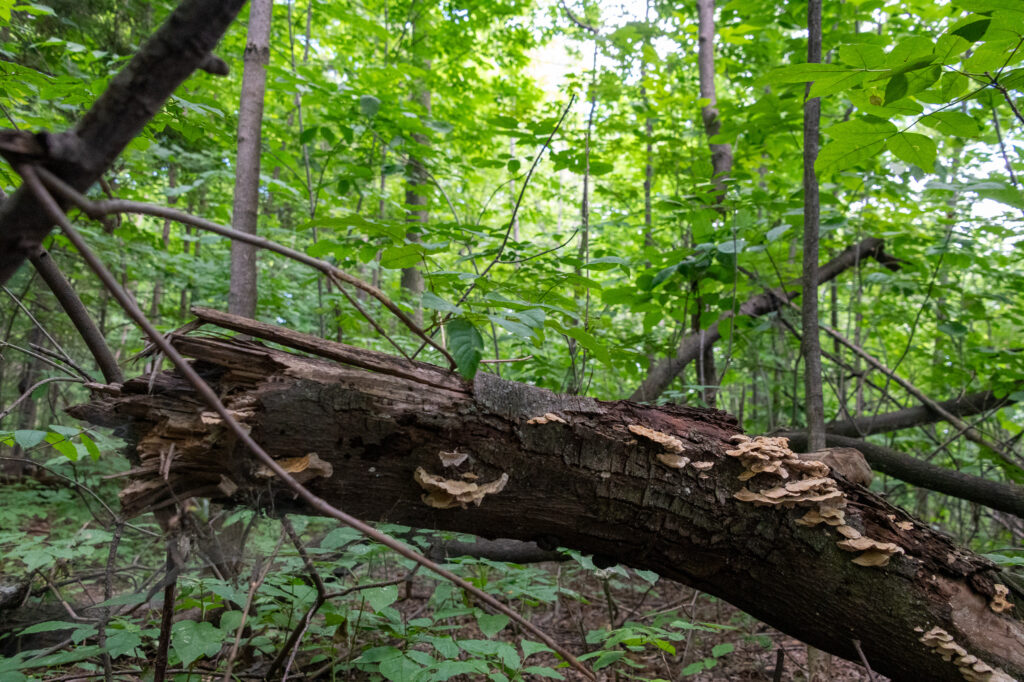
Almost immediately, I was welcomed by some nice brackets on a fallen log. These are the same as (or closely related to) that Turkey Tail above.
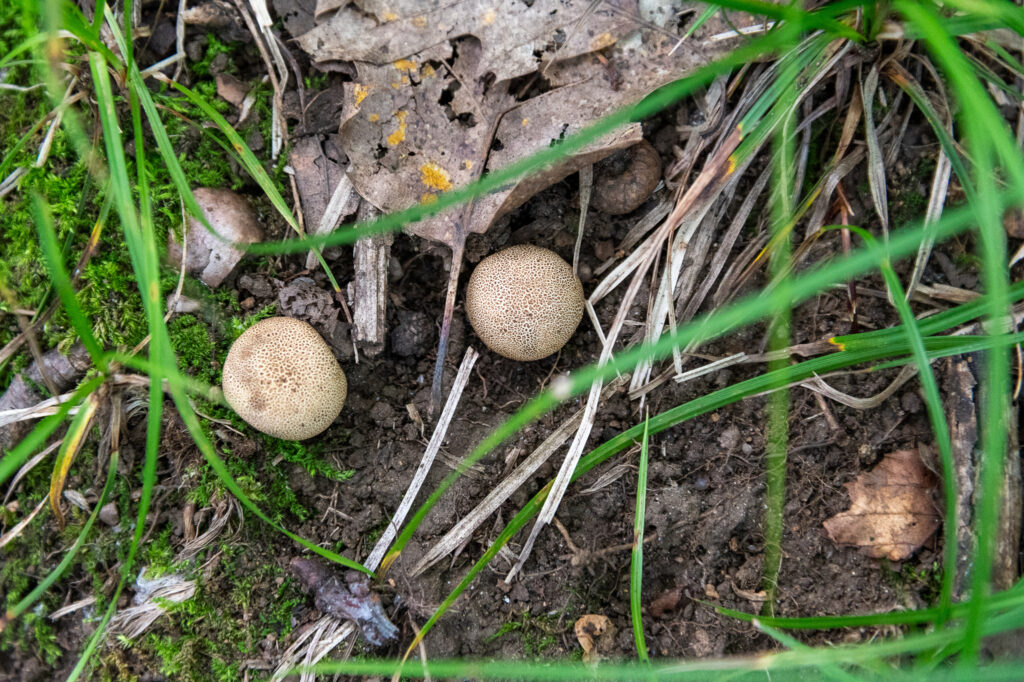
Immediately below, these cute little puffball mushrooms grew.
I went up the Olmstead trail, and took the Grand Staircase that leads to the Mont Royal Chalet. It was a popular place on a crisp Saturday morning. Hundreds of joggers, tourists, hikers, strollers, and cyclists were out enjoying the forest.
I cut off on one of the clifftop trails just short of the Chalet. It’s a less-traveled trail, and goes through places I’d seen mushrooms before.
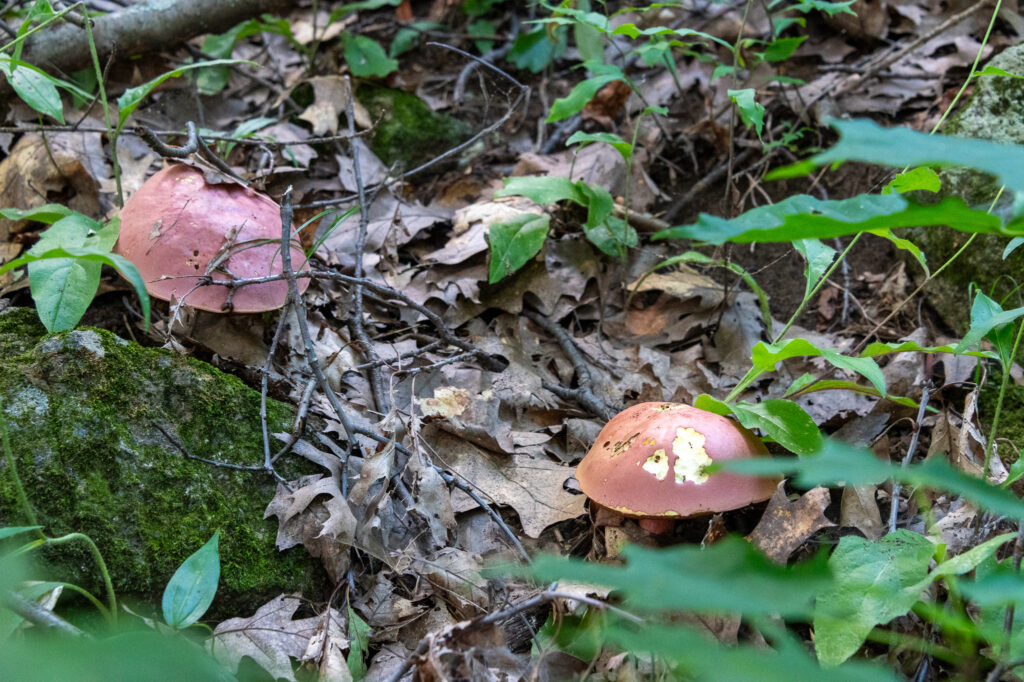
Today, however, the crop along this trail was a little disappointing. It hasn’t rained in a few days, so many of the mushrooms had desiccated, and many had been nibbled on by creatures.
Some had collapsed and rotted. Wait — aren’t mushrooms the things that break down other organic matter? What is breaking down a mushroom? Well, it could be mold or bacteria (for what it’s worth, this took me down a rabbit-hole of online research trying to understand the differences between molds, fungi, slime-molds, mildews, etc.)
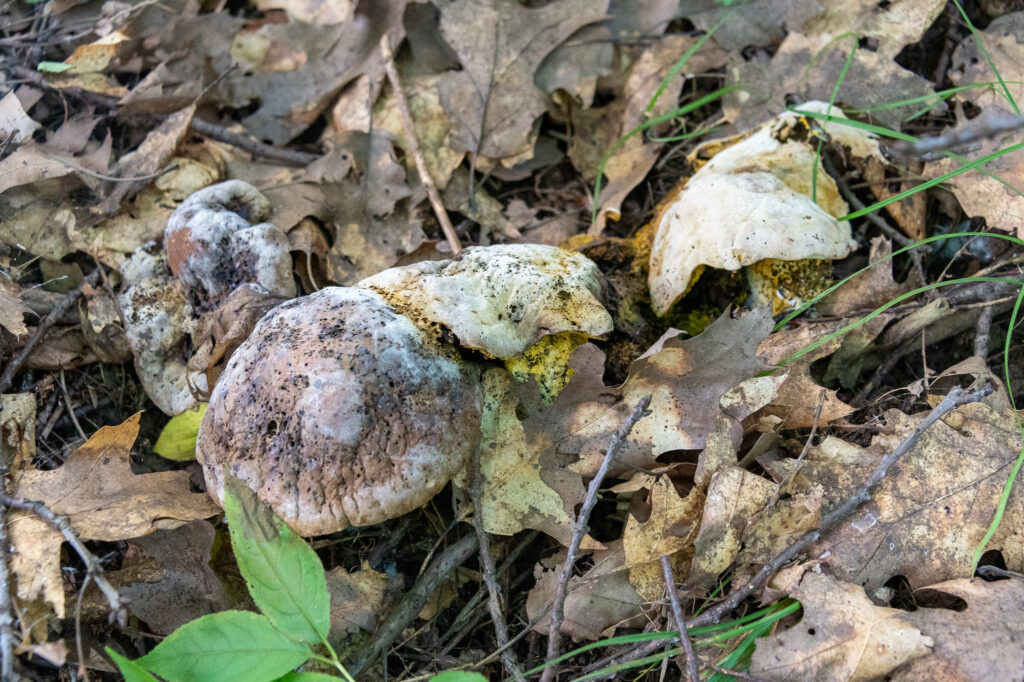
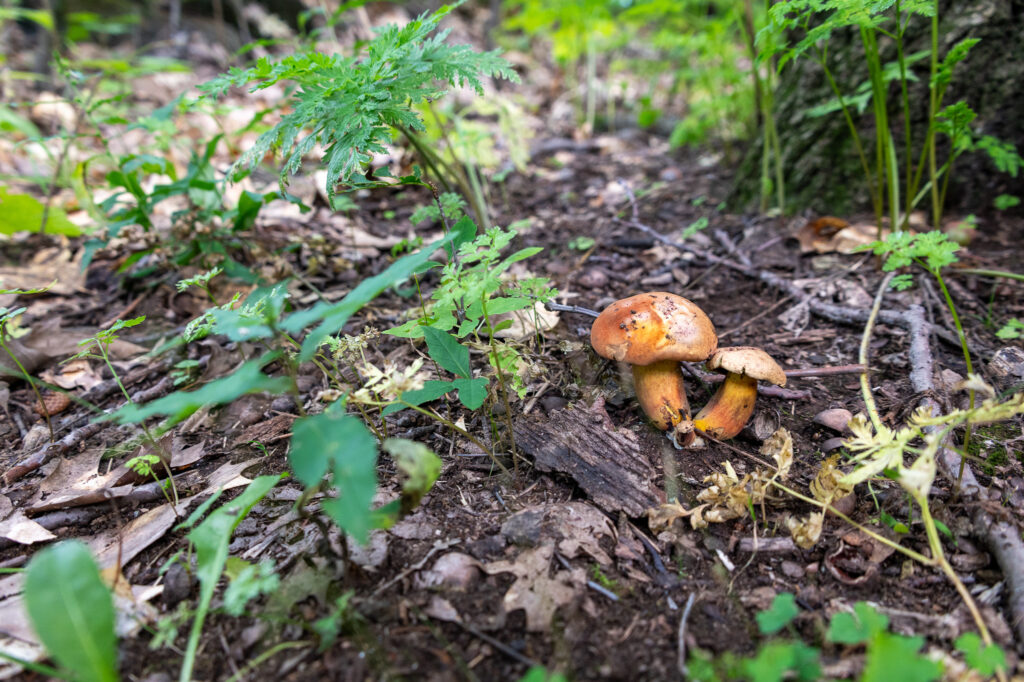
I came across a lot of different kinds of Boletus, most fairly wilted. Many near the trail had been uprooted, and because they had been flipped over, I speculate that mushroom foragers had been identifying them. From what I read, looking at the gills/underside is an important part of ID-ing mushrooms.
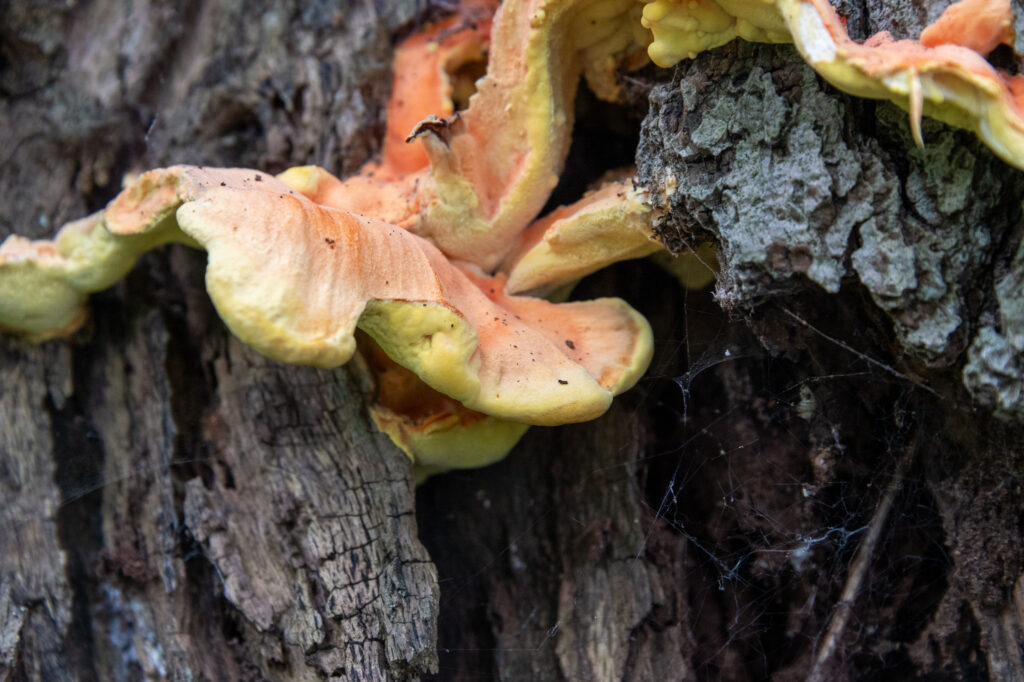
Supporting my forager hypothesis, I came across this Chicken of the Woods, and most of the younger portions had been broken off and taken away. Only some of this older growth was left. From what I read, these are edible but they get tough when they’re too large/old.
I came across several species that are definitely on the Do Not Eat list!
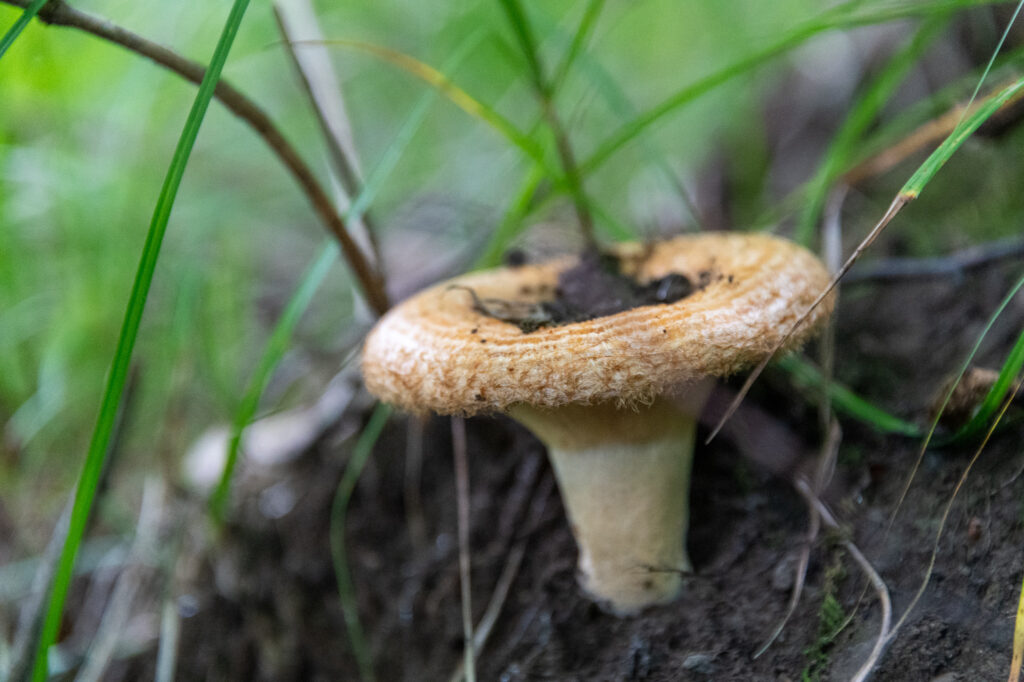
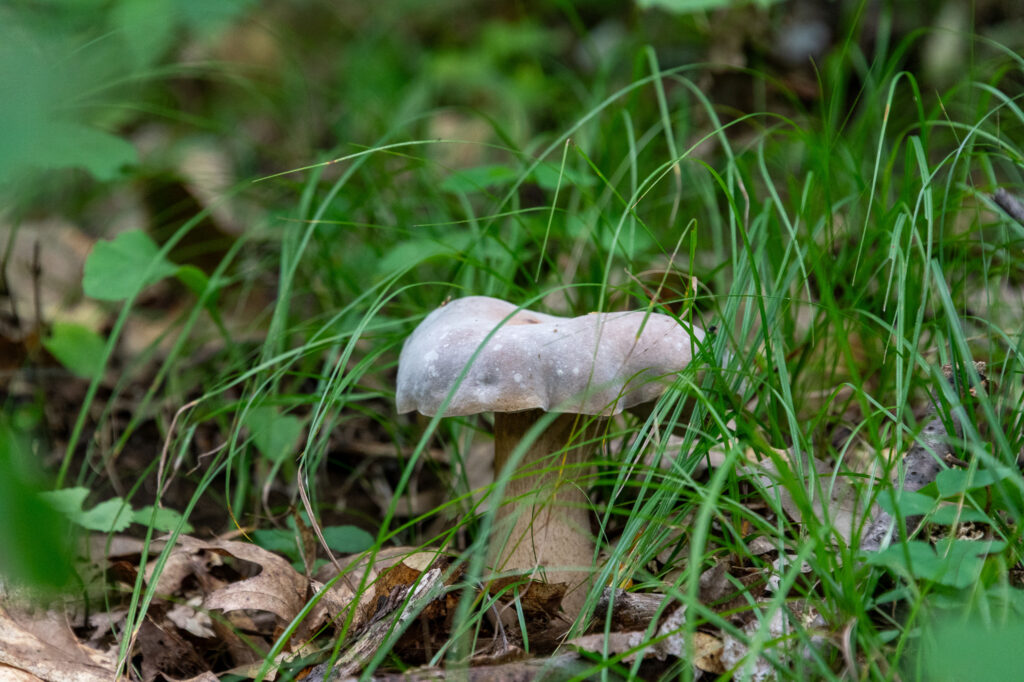
Milk-cap mushrooms include a range from delicious to mildly poisonous. The woolly milkcap above is supposed to cause “gastric distress” and should be avoided.
Worse, if the one below is an Amanita as identified, it’s one of the most toxic mushrooms known!
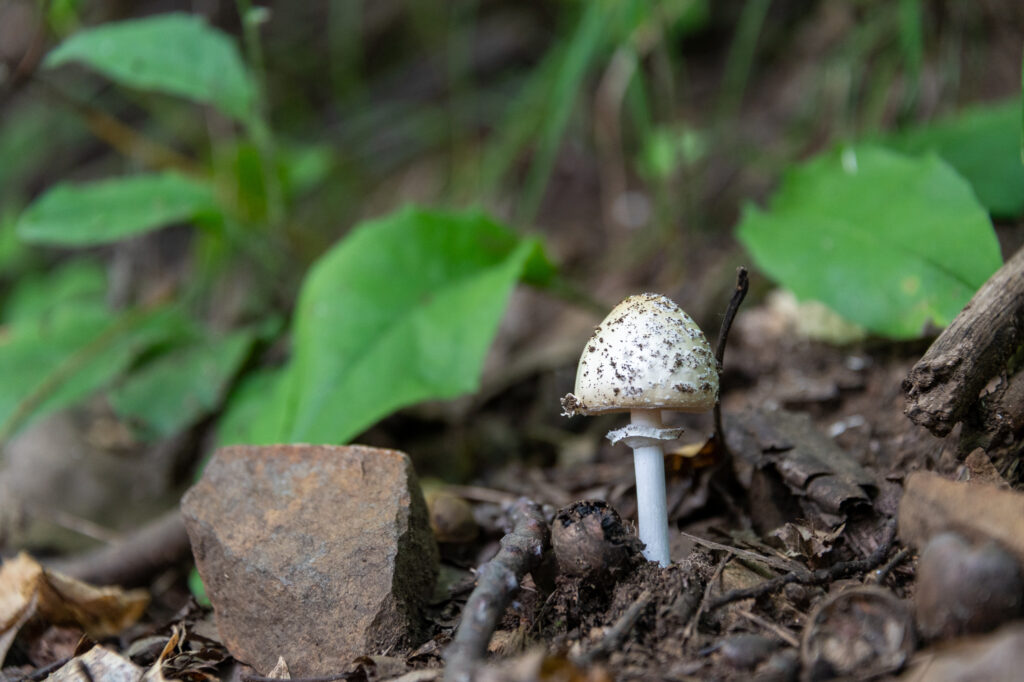
I like mushrooms, but I’m far too ignorant to even consider foraging. I read about people trusting apps — which I have done to ID them in this blog post. But I have trust issues. When I was in the field, the “Seek” app briefly identified this amanita as a puffball when I scanned it from above. Puffballs are almost all edible. Amanita are too, but only once.
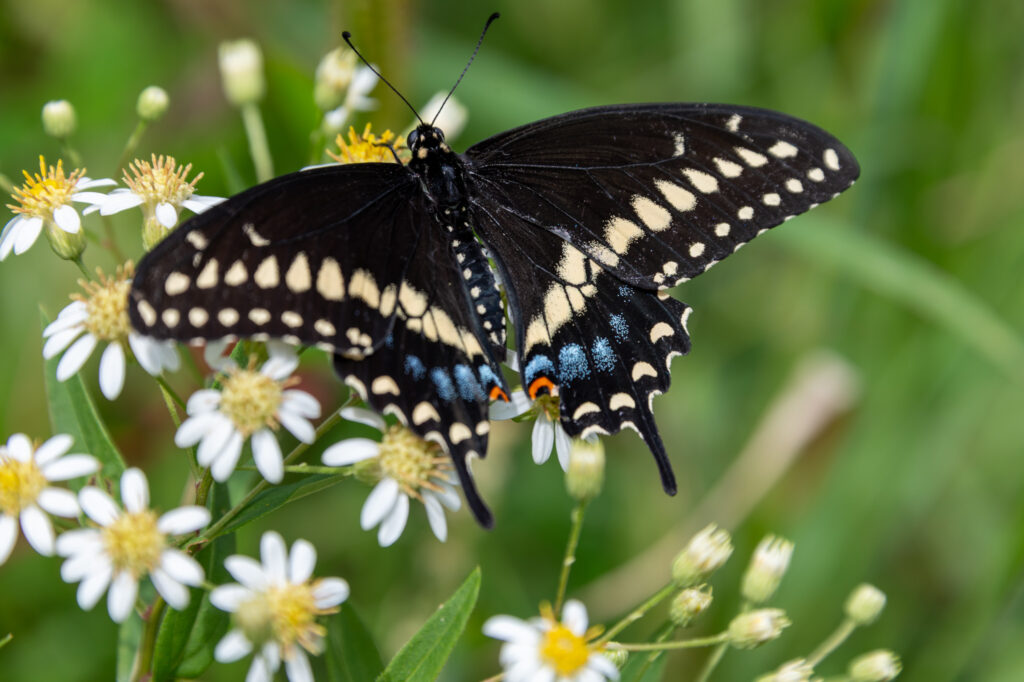
While my powers of identification are sometimes fooled, I did successfully ID this following one as a non-edible non-fungus!
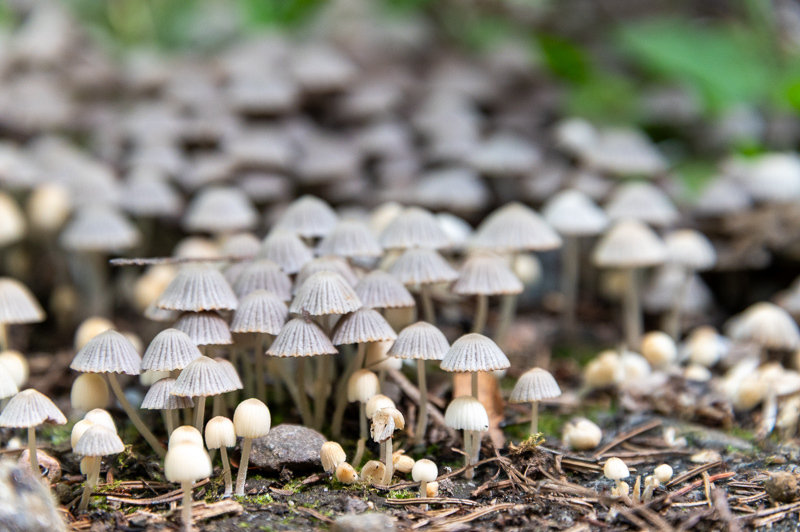
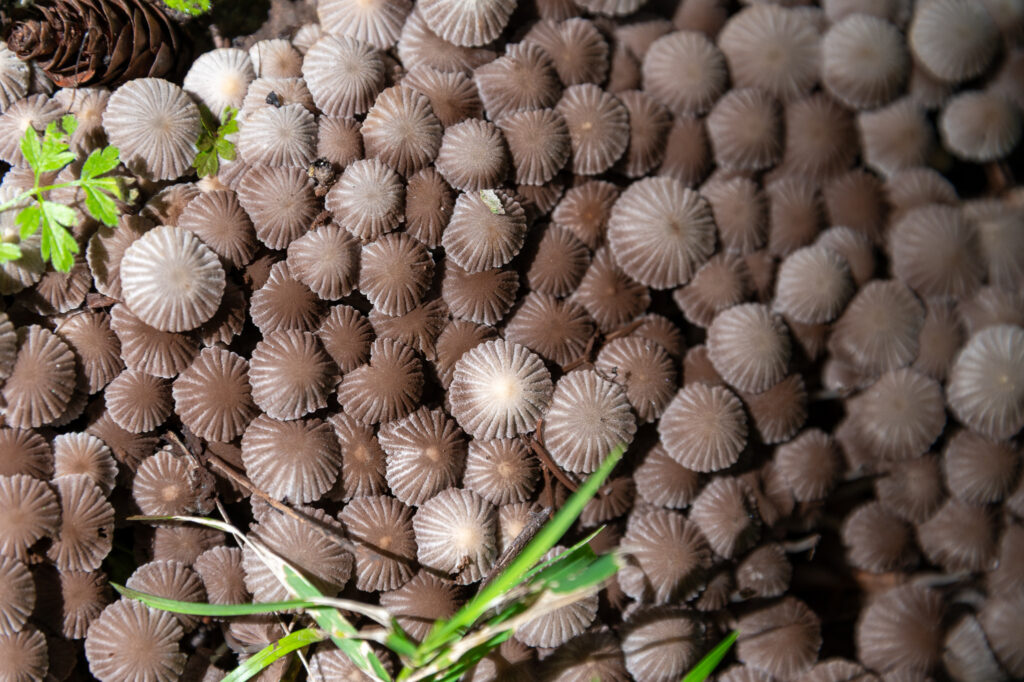
The last bunch of mushrooms for this over-long posting is a cluster of fairy inkcaps. These delicate little mushrooms formed a dense carpet in just one place near the trail.
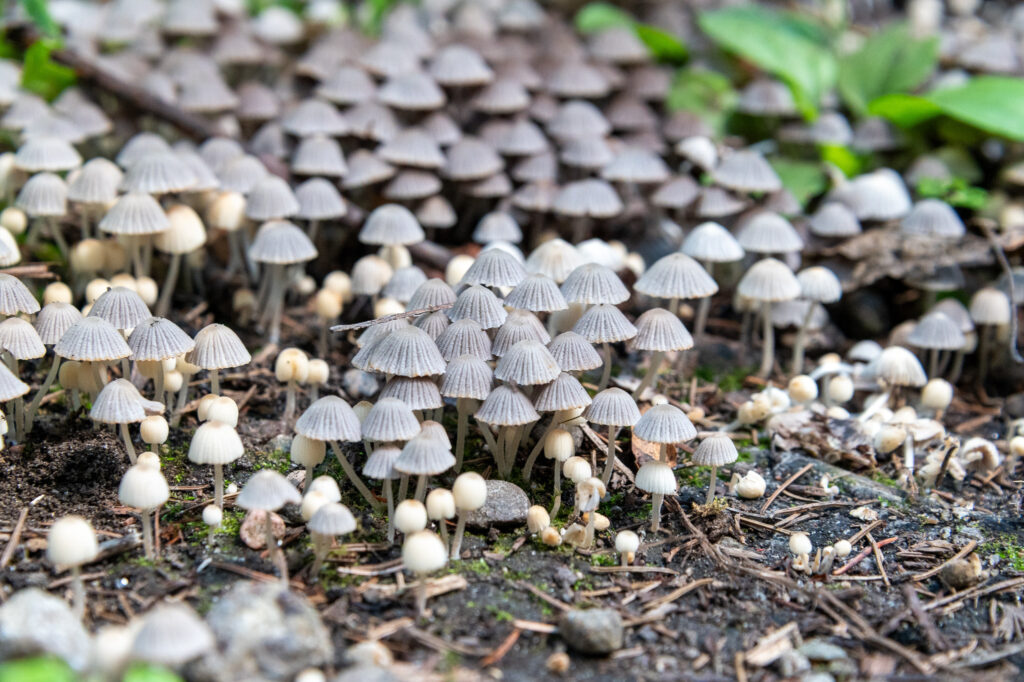
‘Scuse me, pardon me, growing through here …
So I didn’t see big, showy mushrooms like in past years, but there was a decent variety.
The season is still young. If we get a good rain in the next week or two, I may try to go up there again and look to see what else has come up. If I find anything interesting, I’ll post here.
One reply on “Mont Royal Mushrooms”
What neat pictures! We have a fondness for fungus in our family (strictly the outdoor kind.) And feeling jealous of your cold weather – at 10:45 it’s 82˚ here in LA.