
There’s a company here in Montreal called Navette Nature — nature shuttle — that specializes in getting people without cars to national parks or other activities in nature. They have a fleet of old (and frankly uncomfortable) school buses, and they leave from the convenient central bus terminal. They even have a few free bus trips each year to nearby nature parks!
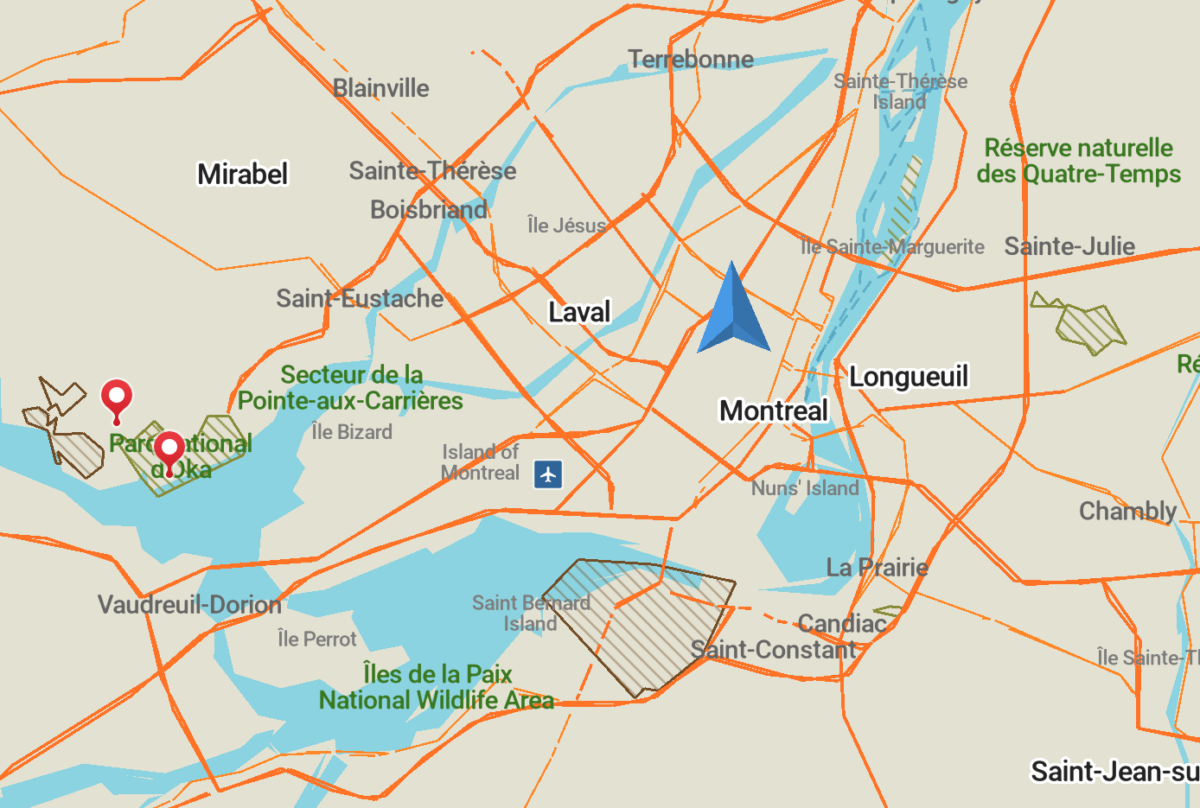
We went yesterday on a trip to pick apples and visit the Oka National park. These activities were to the north-west of Montreal (see map at the top of the page), about an hour away by bus sans traffic.
We set out early, and the bus took us to our first stop at the Labonté Orchard (Verger Labonté de la pomme).
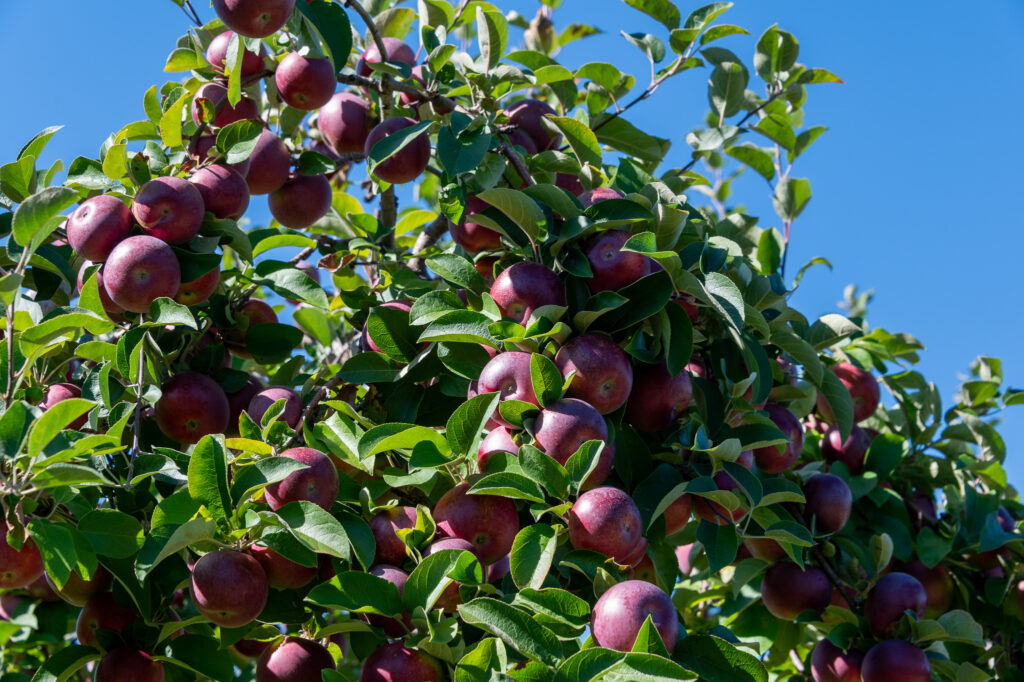
I imagine that being an apple farmer is hard work. You have to have access to a big patch of land, plant and tend to your trees, and harvest in a very limited time to get the produce to market. There are other worries, like diseases, bad weather, the threat of tariffs destroying your market (if you export), and so on.
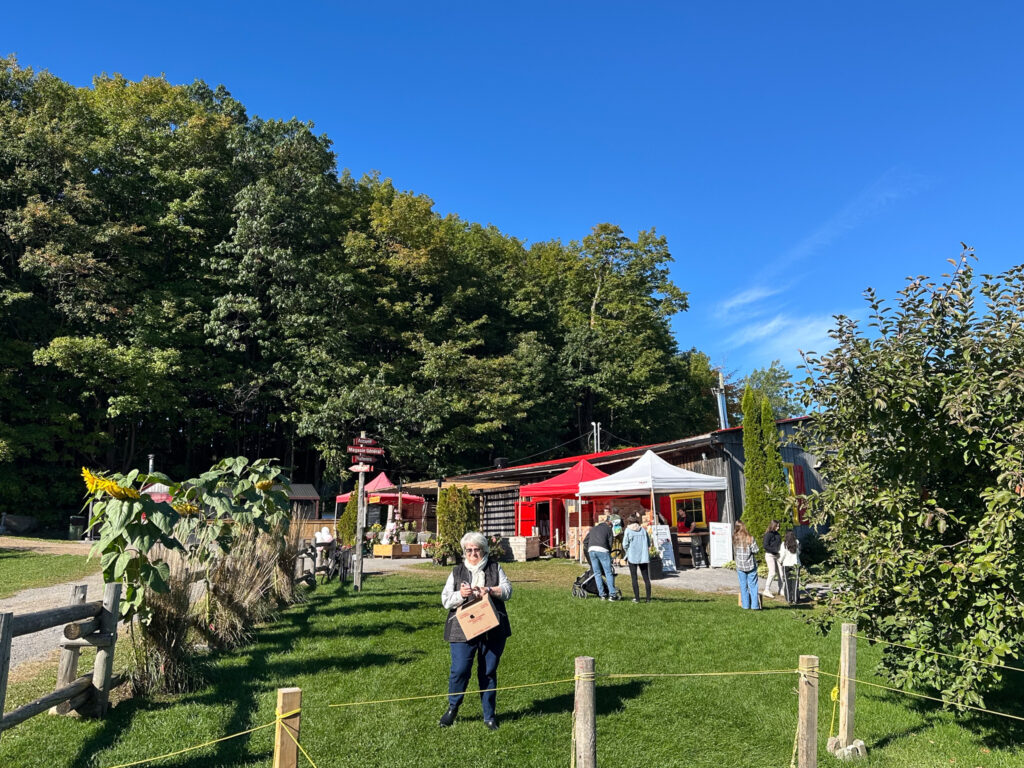
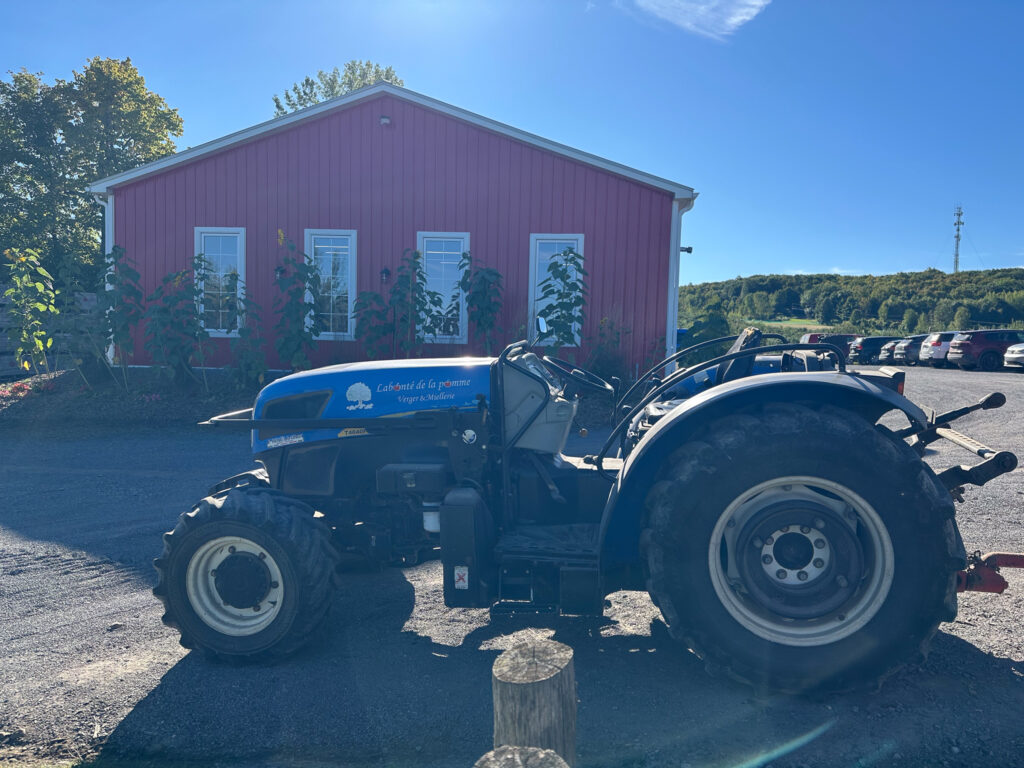
So some orchards try to counteract these difficulties by setting up a picnic area and parking lot, some food stands, souvenir shops, maybe a petting zoo for the kids, and possibly a ciderie for the adults. They’ll put a trailer on the old tractor to take people out into the fields, and invite the public to come and have a glorious day out where they can pick their own apples.
This seems like a good system. Families make a day of it. They can enjoy the countryside, see the beautiful trees, breathe fresh air, learn where their food comes from, and get some last good sunshine before the rapidly approaching winter.
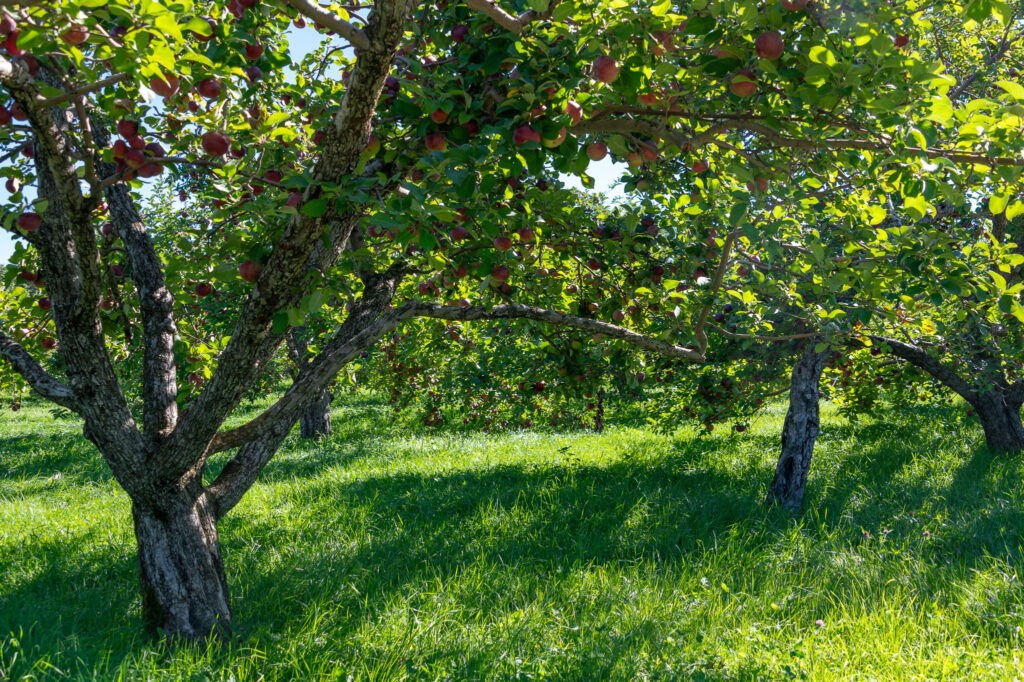
It works out for the farmers, too! They probably make significantly more money selling people a 3-liter apple basket to fill than they would just harvesting and selling the apples themselves.
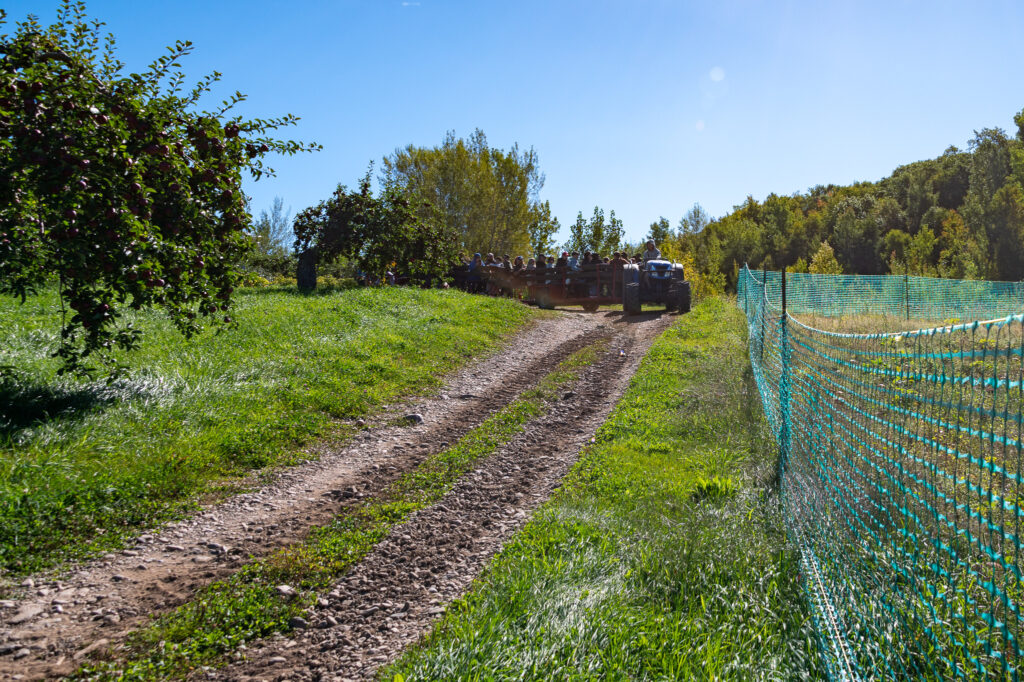
Upon arrival we were given aforementioned 3-liter apple baskets, and waited in a line to be taken up into the orchard by tractor. The ride took us up the hill, along bucolic views, and through beautiful orchards full of fruit.
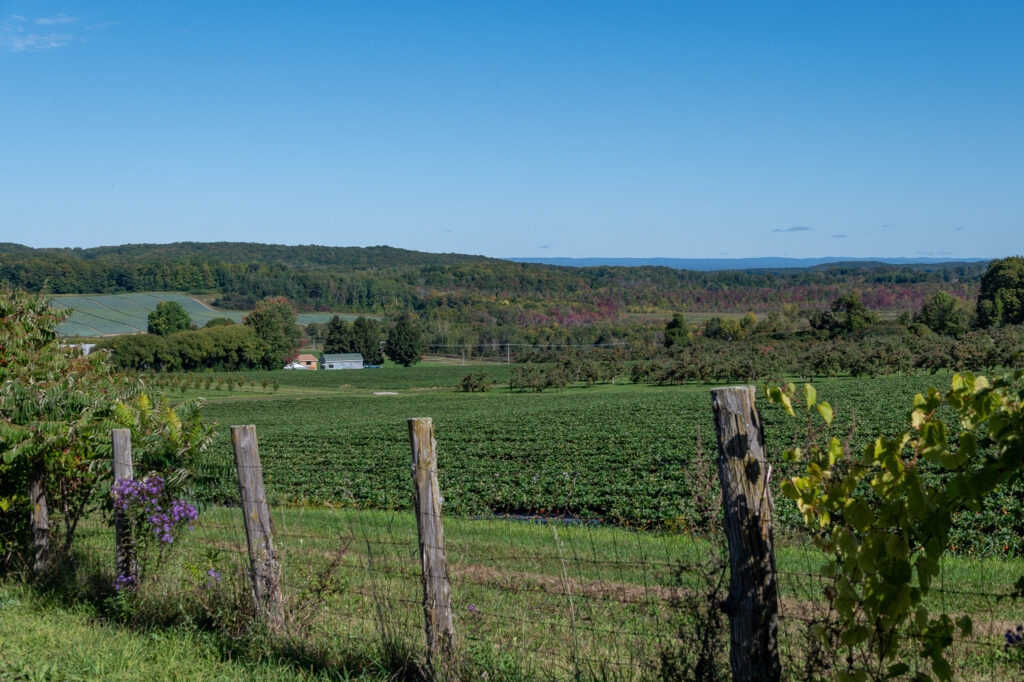
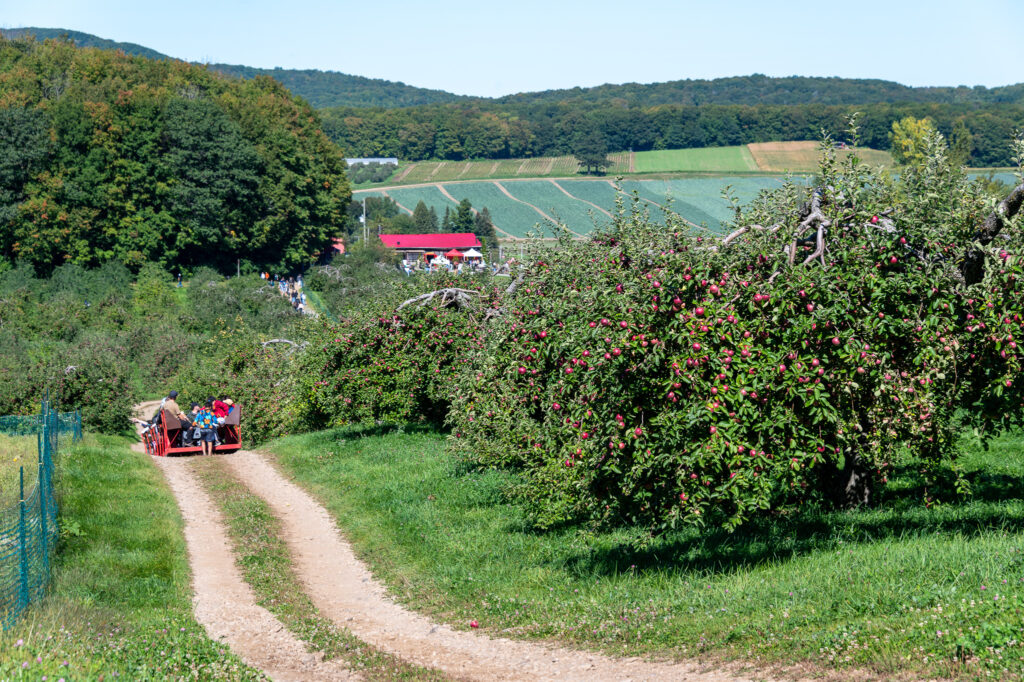
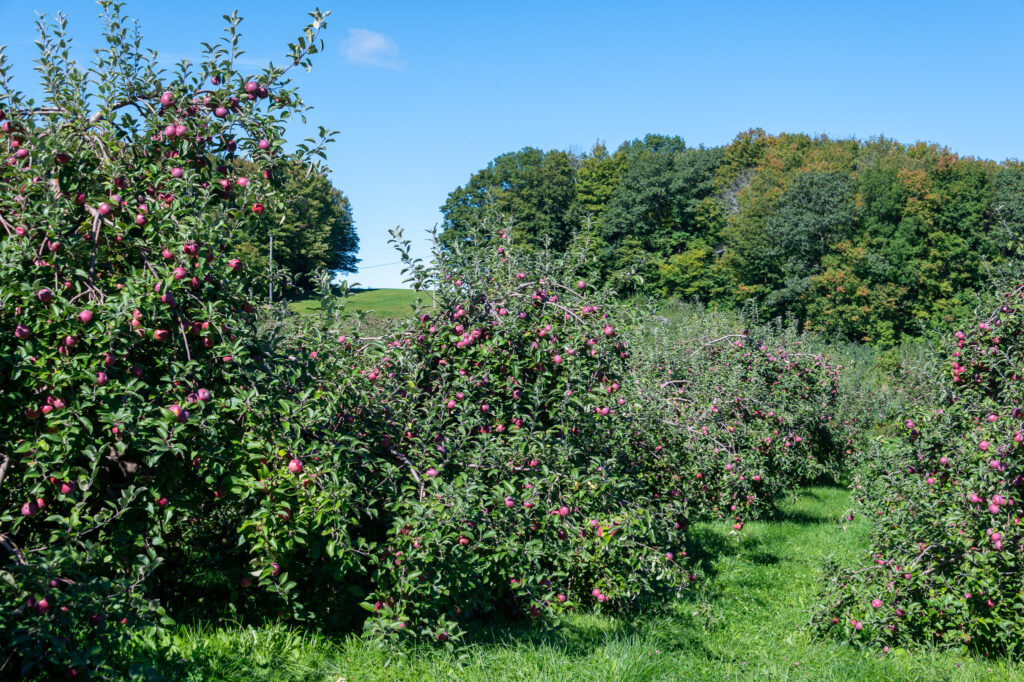
Then the tractor stopped, and we got off in the area of the orchard where the apples were ripe and where we were permitted to pick fruit. Many areas are reserved — whether the variety of apple matures at a different time, or the fruit is already spoken for, we weren’t sure. Certain areas are also premium programs (like the plums, pears, some kinds of apples like the Prime Gold) that presumably cost more.
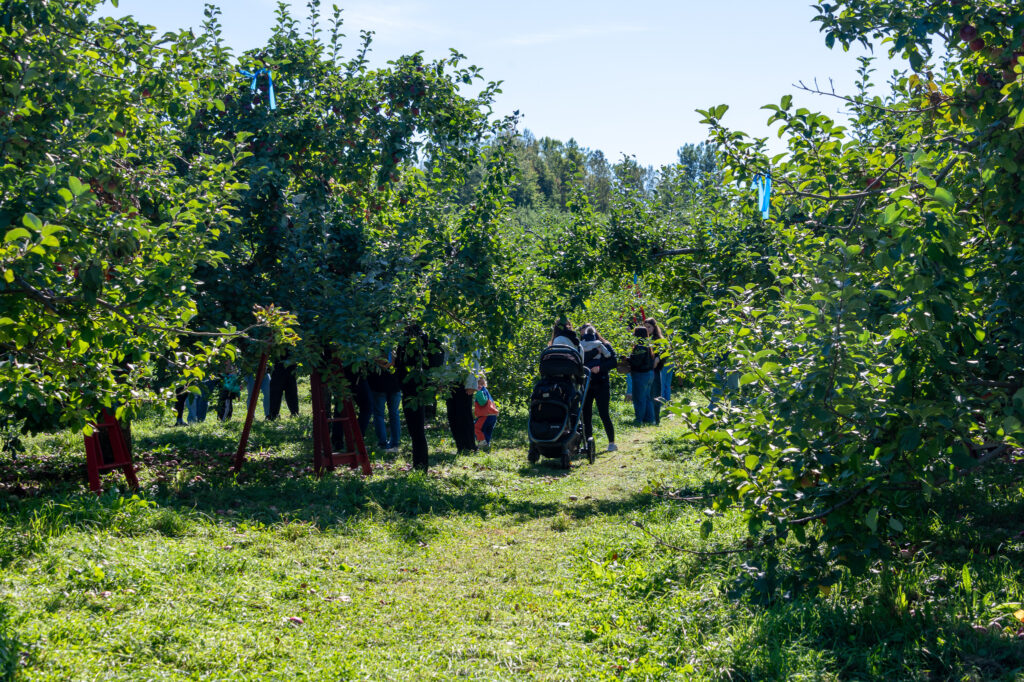
We went into the Lobo apple orchard, along with a trailer-load of other people. We were given a brief explanation of how to pick and which trees were permitted (which was very hard to understand), and then we followed the crowd. This area was pretty thoroughly picked, but it still didn’t take us too long to get our apples.
Not shown in these pictures are many happy family scenes. They ranged from toddlers gleefully waddling around on the lawns with apples, to teenagers daring one another to go higher on the tall ladders, to the bridal party wearing honorary sashes, to the picnic tables on the lawn with people enjoying their lunches.
Our next stop was Oka National Park. We had two options, the first being the Calvaire d’Oka (a site with chapels from the 1740s) and a hike to a hilltop, or the beach area. We chose the latter.
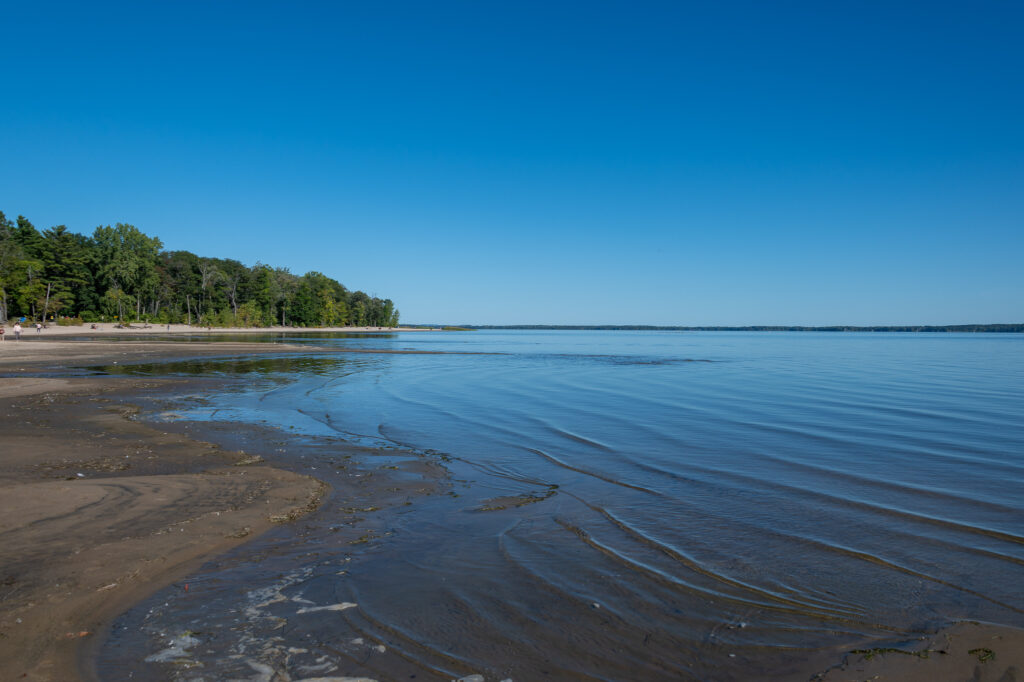
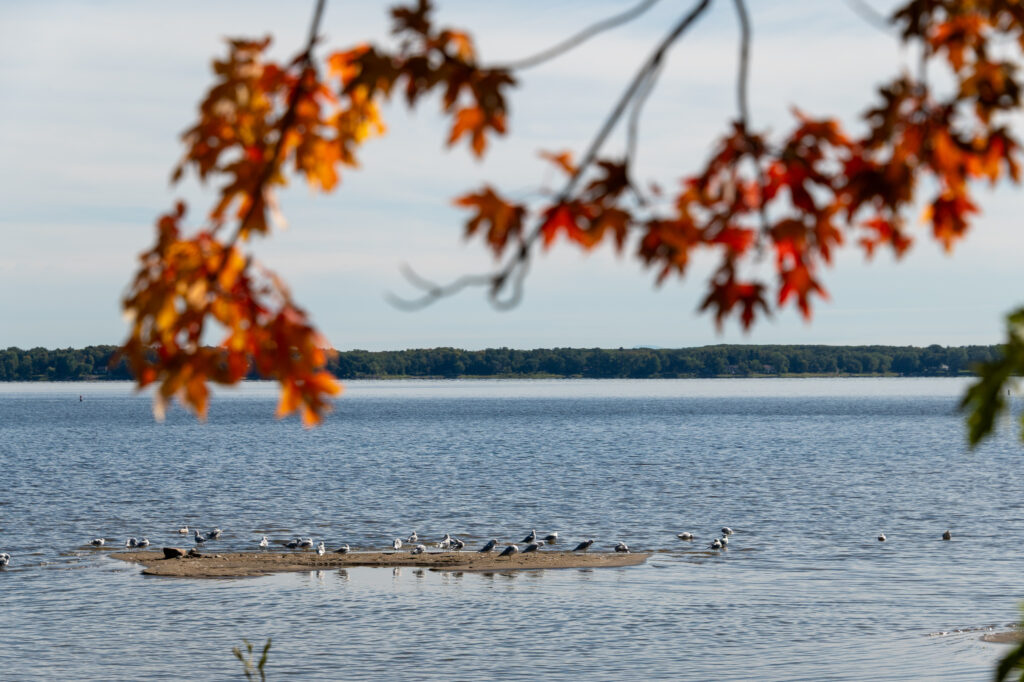
Oka park is forested in this area, where it abruptly comes to a series of parking lots and then the beach. The beach is the shores of Lac des Deux Montagnes, a widening of the Ottawa River before it merges with the Saint Lawrence River.
We started at the visitor center. While it was not particularly crowded in mid-September, we could imagine that this area would be packed in the hotter summer months. There is parking and camping sites to support a lot of people.
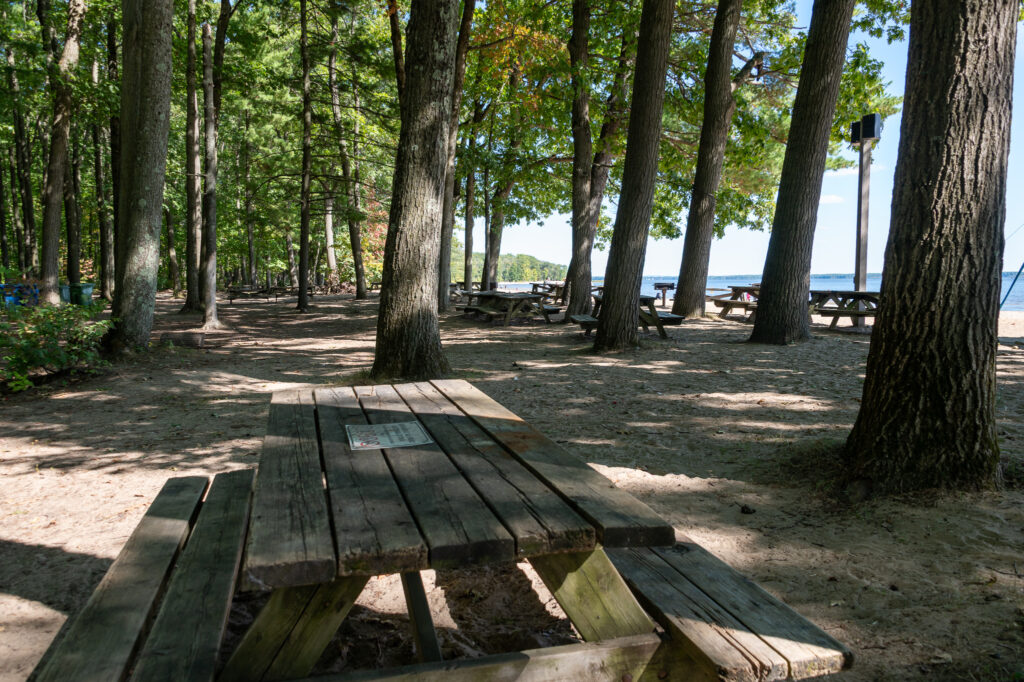
At the visitor center, we got a “family size” basket of fries to eat while getting the lay of the land. We then walked along the Sentier de la Serpentine, a raised boardwalk that winds into the woods with some interpretive signs about the native turtles, monarch butterflies, and conservation.
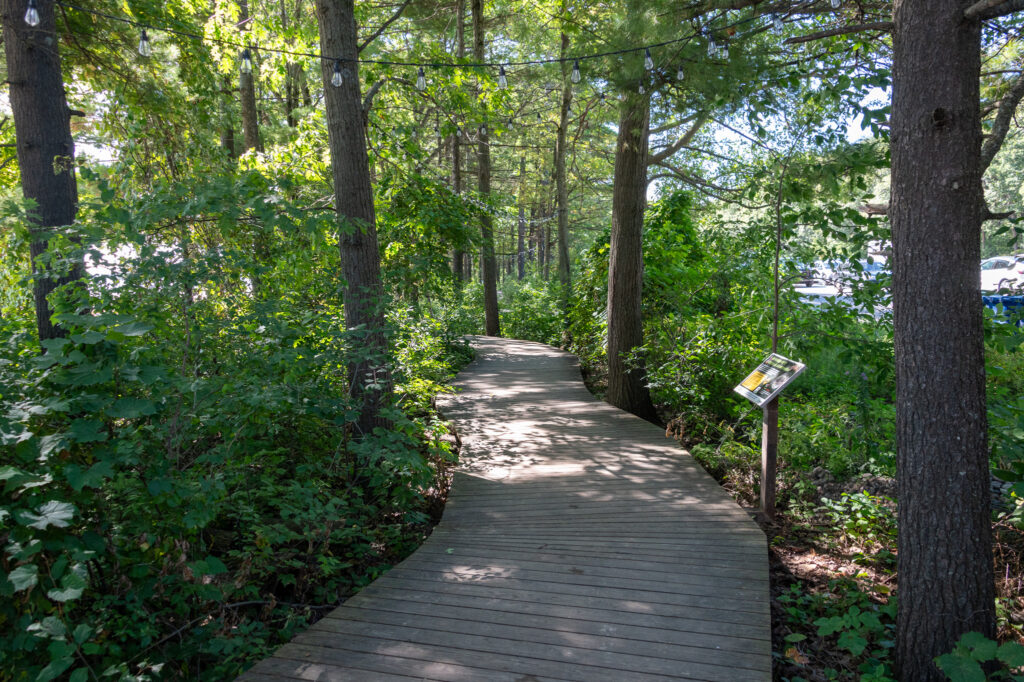
The boardwalk starts in a thin strip of forest between the parking lots and the beach. On the beach side, there are campsites, playgrounds full of children, people BBQing, and people wading in the water.
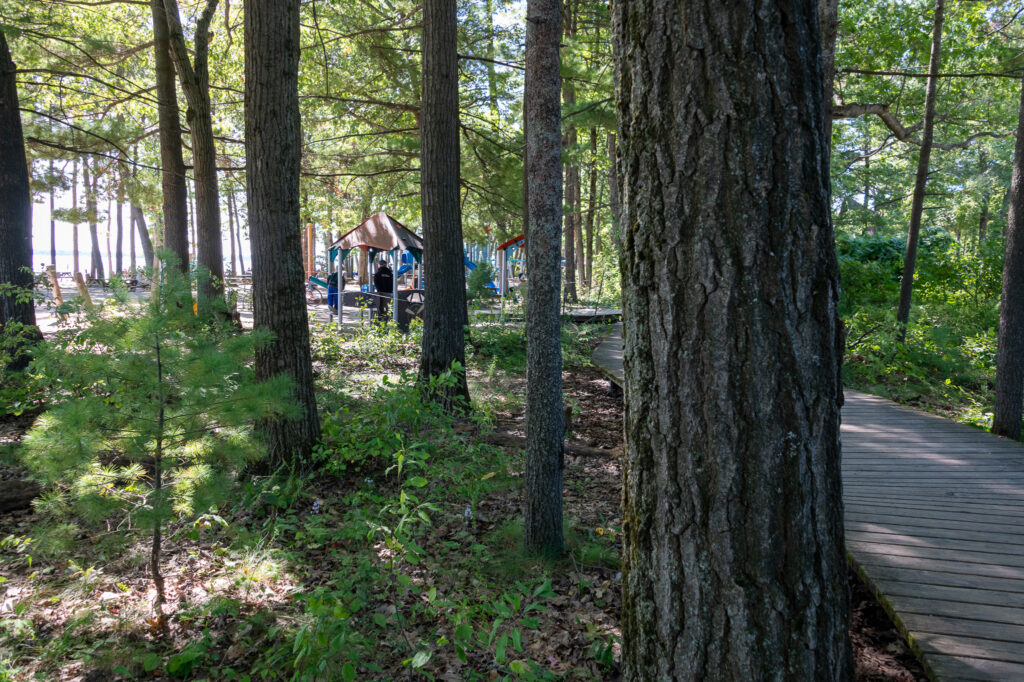
After a while, the boardwalk goes deeper into woods.
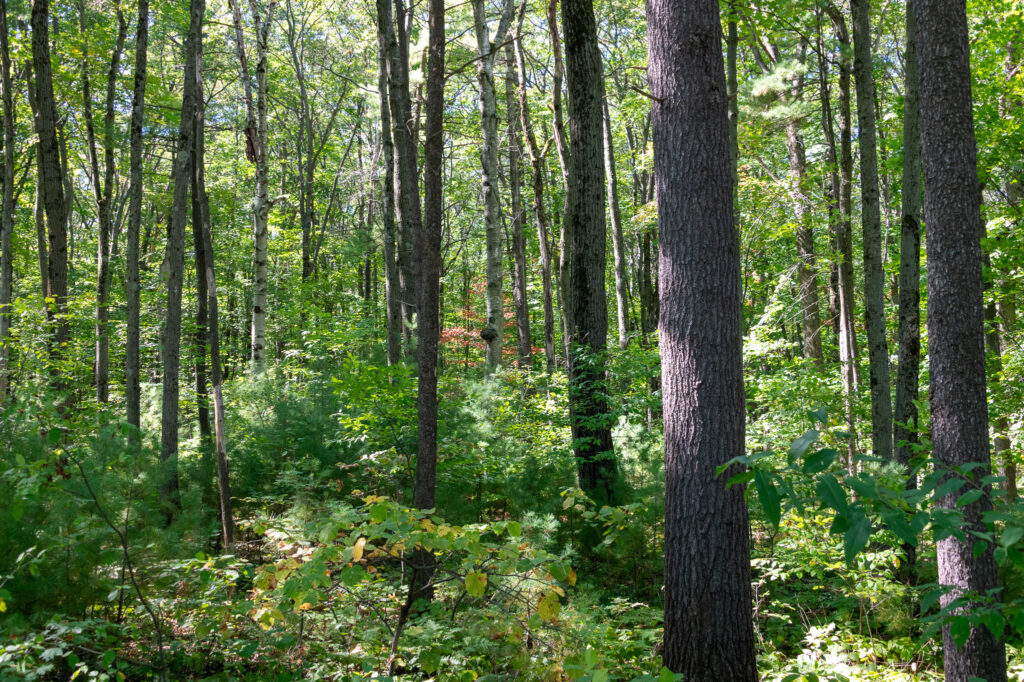
Even a short way in, there was barely any sound of humanity. One lookout area had wooden chairs, where we sat and listened to the wind in the trees and the geese honking in the lake. Except for the occasional jet-ski on the lake or passing airplane, it felt like we were far from civilization.
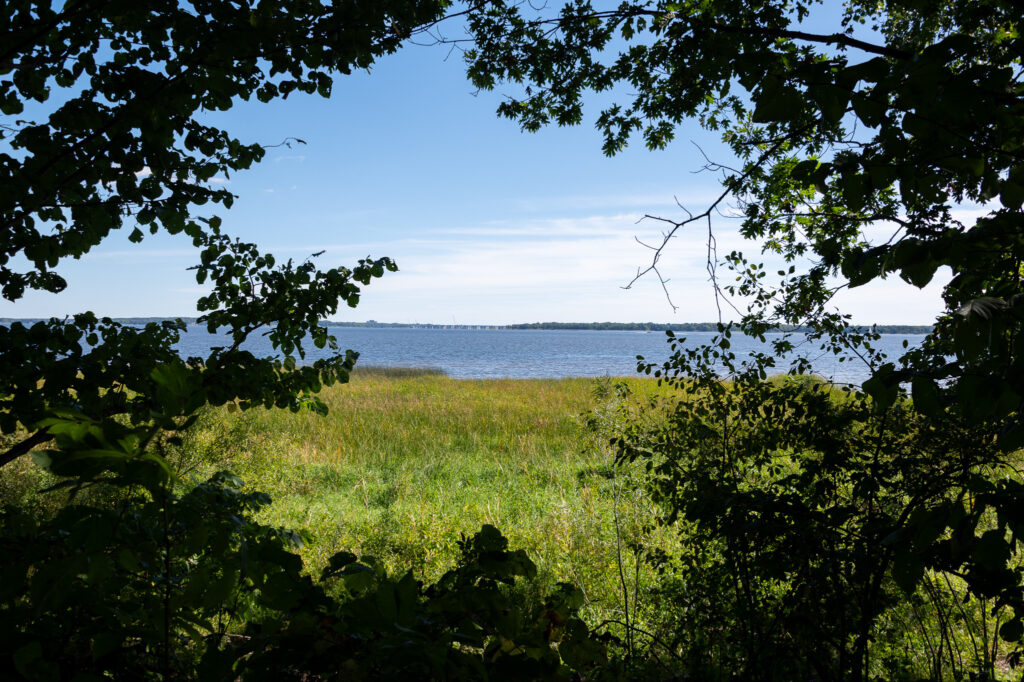
We turned around and walked back towards the visitor center, staying closer to the beach this time. We saw a lot more people this time.
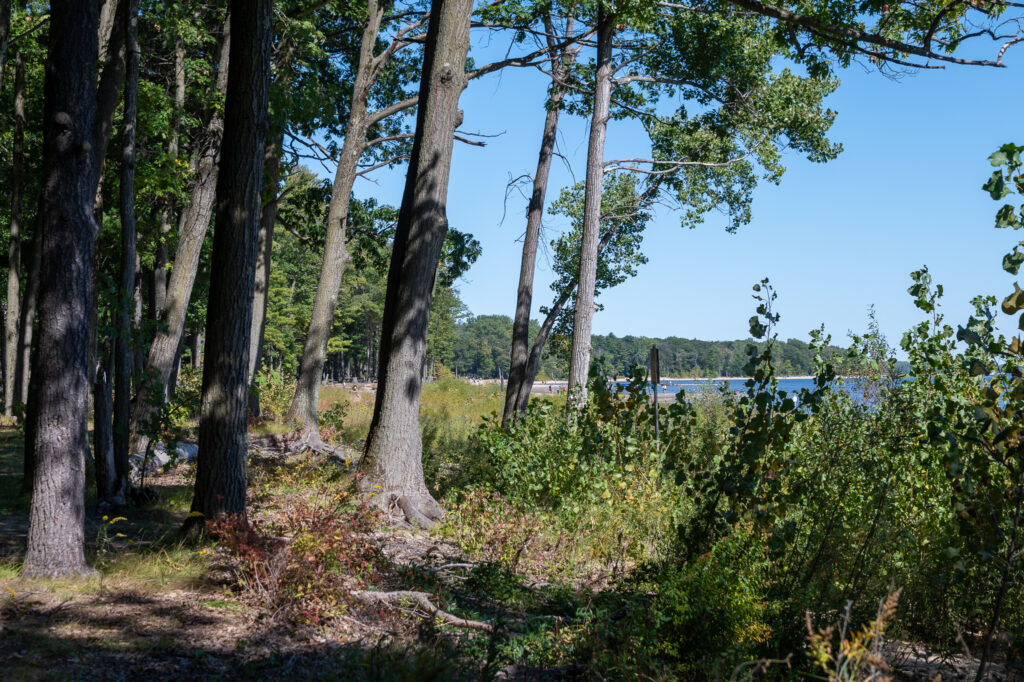
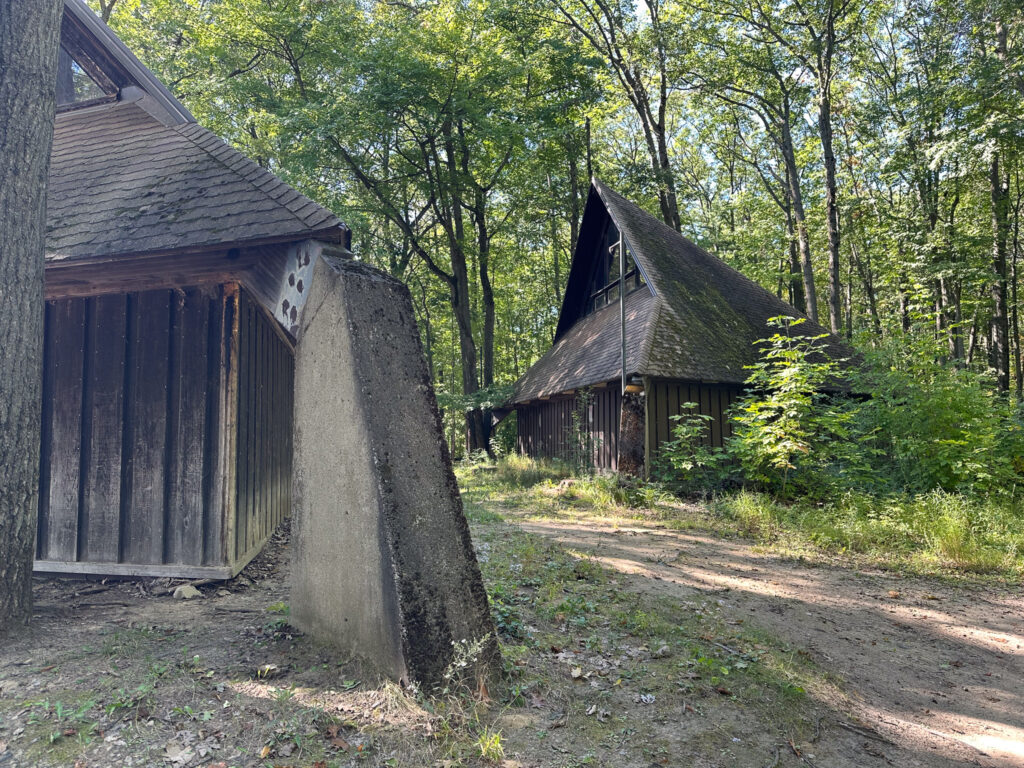
We followed a different trail along the beach on the other side of the visitor center. There, we saw even more facilities for the busy season. There were bike trails, tables, concrete ping-pong tables, and even funky/witchy event buildings that looked like they were from a Miyazaki film.
Again, although it was clear that the area was set up for big crowds, we felt almost alone. We could sit in the silence and appreciate the natural beauty.
From there, we returned to the bus meeting point. The bus hit traffic on the way back, but we were worn out and glad that we weren’t the ones who had to drive.