
Not far from our apartment, in Parc Frédéric-Back, can be found Tohu, a nonprofit circus-arts venue and cultural organization. They promote circus-related events, have programs for teaching skills to disadvantaged youth, and also have an environmental component. During the summer, they put on a free circus festival throughout the city where there were free performances and demonstrations. We attended some of these events — perhaps I’ll find time to write them up here.
Yesterday, however, we attended one of the environmental events: “Acrobats of the Sky,” a raptor show by Faucon-Éduc. I’m not entirely sure how a bird of prey show fits into environmental action; perhaps as education and outreach. Faucon-Éduc’s web site tells me they raise raptors for pest control, education, and for TV & movie work. In any case, they cooperate with Tohu and the city of Montreal to put on free shows in the “prairie” section of the park.
There were a couple of tents set up, and a roped off area. A crowd of maybe a hundred or a hundred-and-fifty people gathered outside of the rope. It was almost all locals; families with kids of all sizes, people showing up on bikes, and people like me lugging camera gear.
They brought out five birds over the course of the show. As part of the education there was a running narrative and a lot of information given, but the audio system was a little echo-ey and the French was very rapid, so I absorbed very little of it.
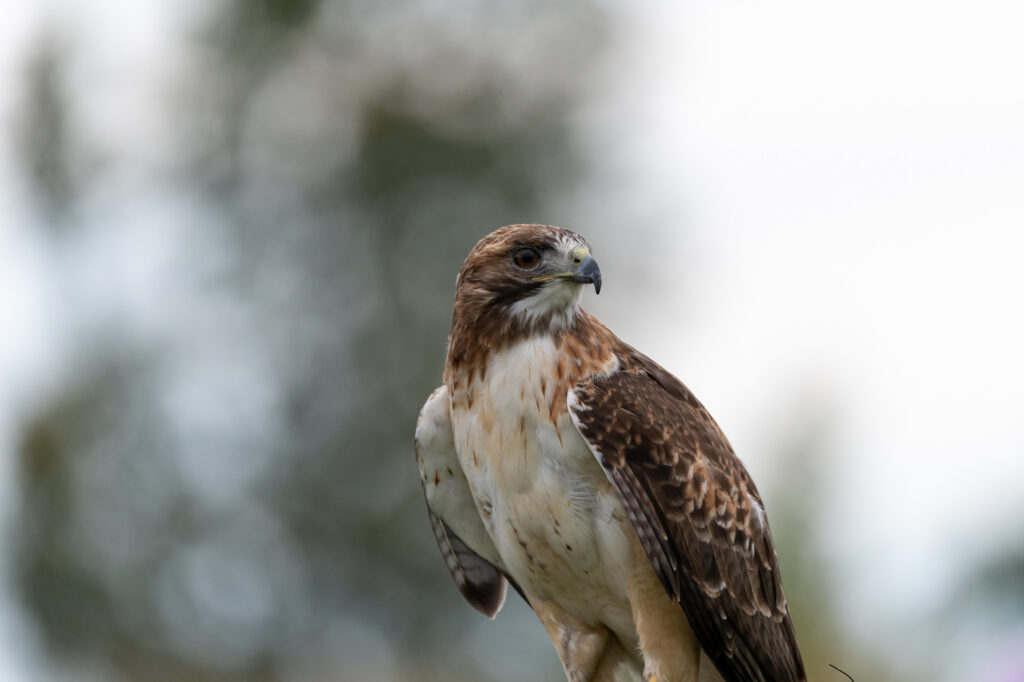
First was a red-tailed hawk (Buteo jamaicensis). These are native here as well as in California, and I think that I see them (I often confuse them with red-shouldered hawks) in the botanical gardens with some regularity, although not quite as close up as this one.
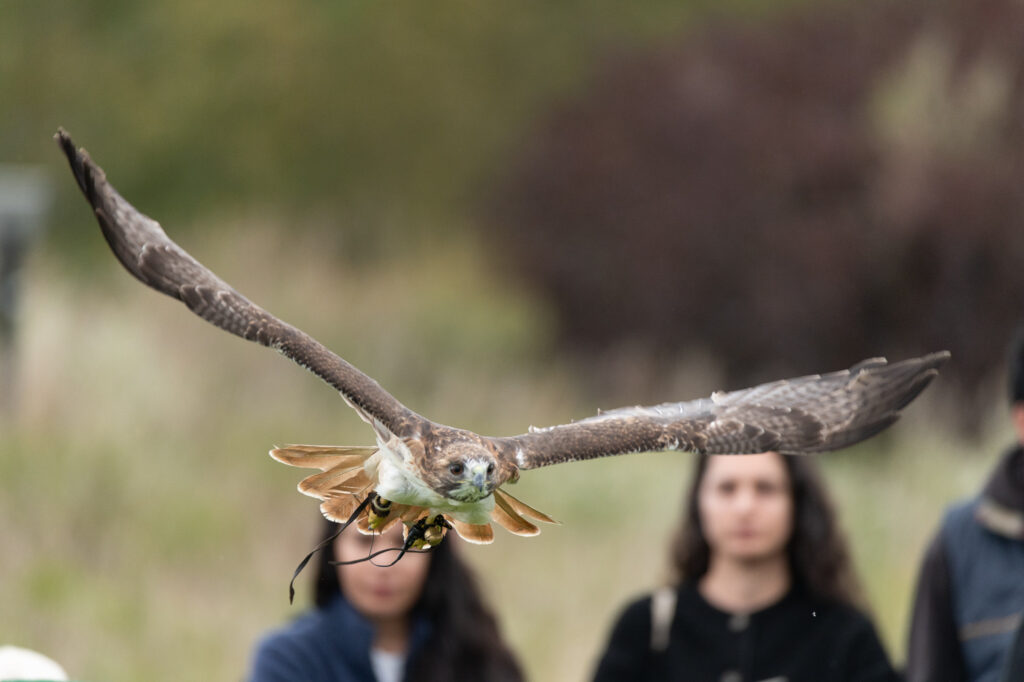
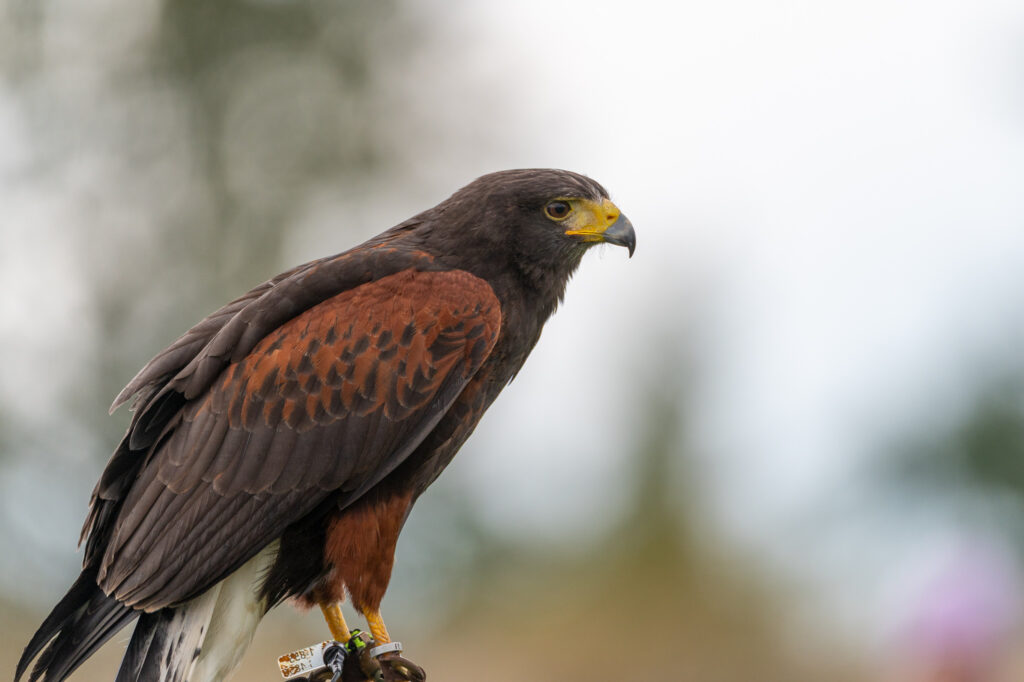
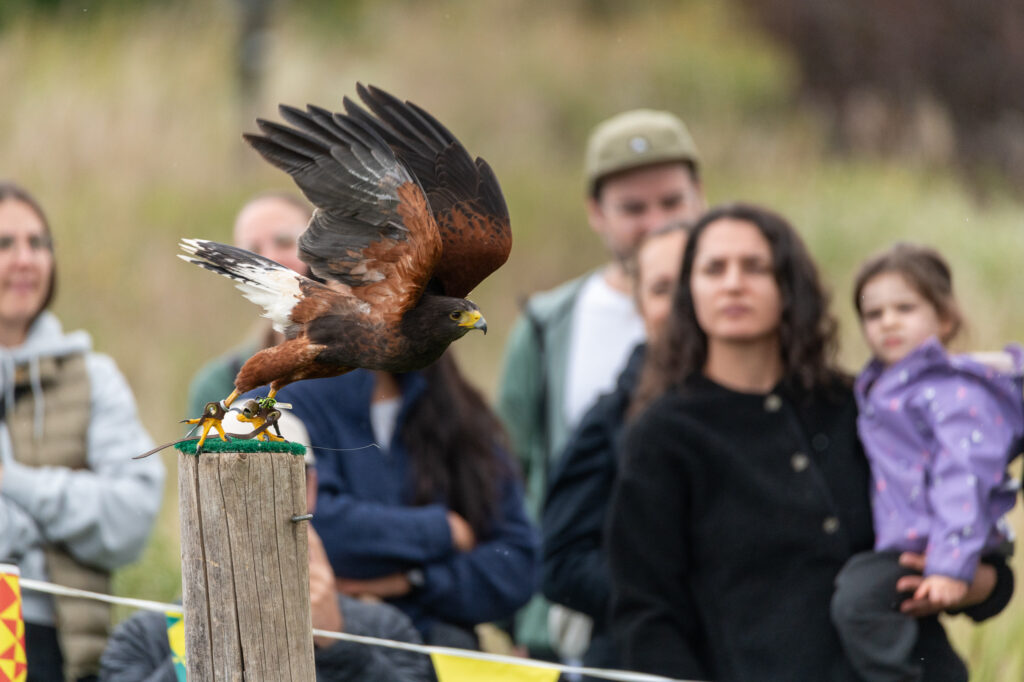
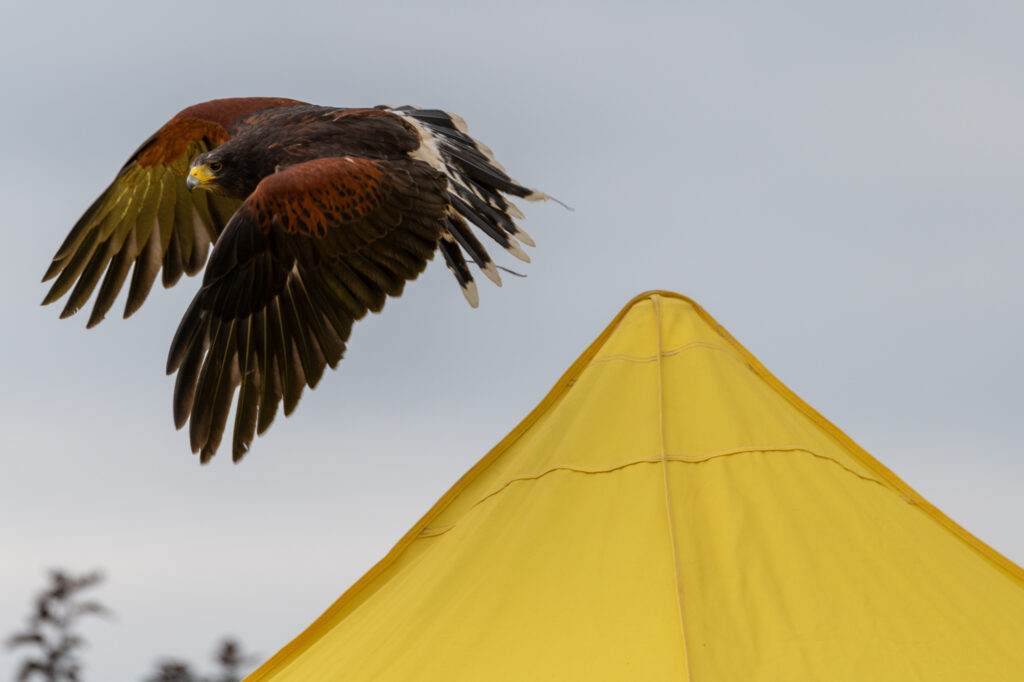
Next was a Harris’s hawk (Parabuteo unicinctus). It was less cooperative than the red-tailed hawk. At one point, it refused to land on the glove, and instead went up to perch on the tent. But a little food soon lured it down.
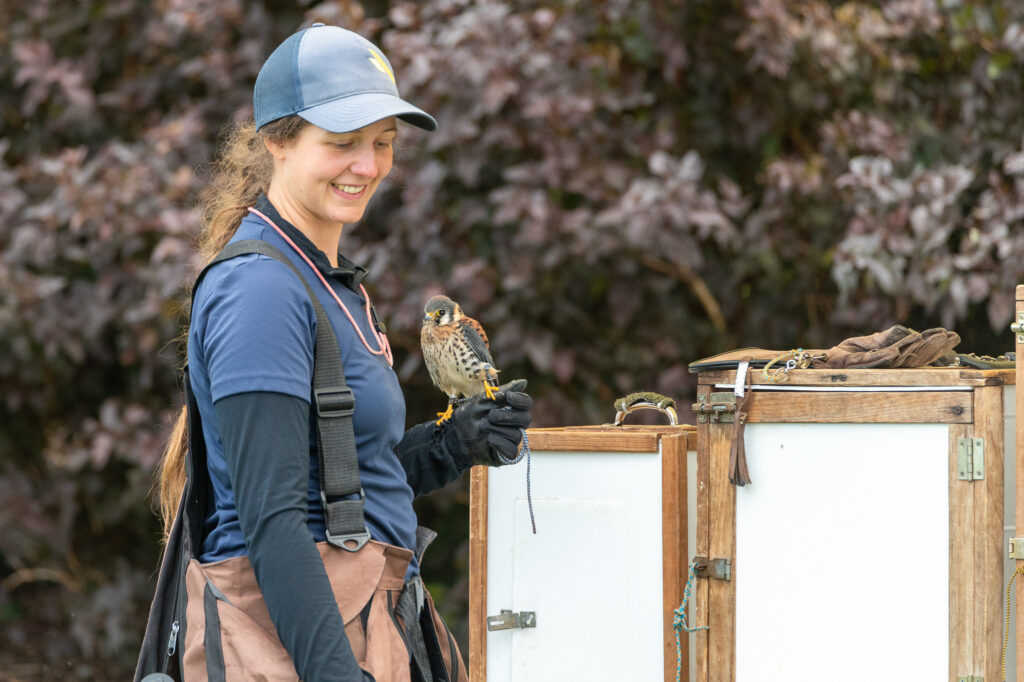
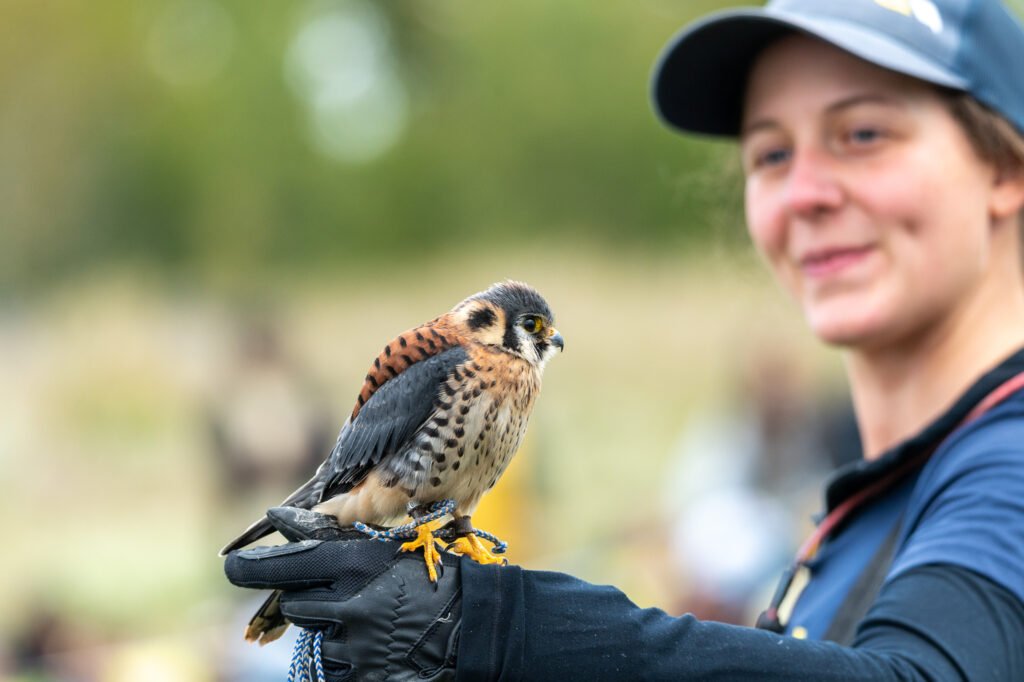
After these two big, fierce birds, the next seemed very small and cute. This was an American kestrel (Falco sparverius). The kestrel was kept with the handler, and didn’t fly to the various posts in the performance area. The handler did carry it around so we could all get a closer look.
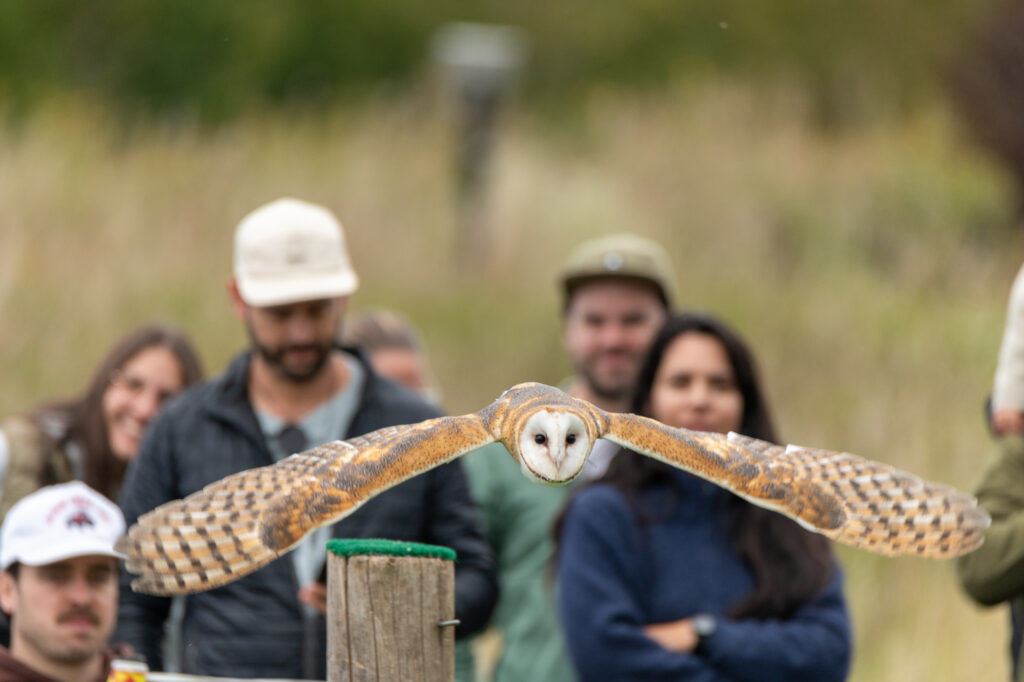
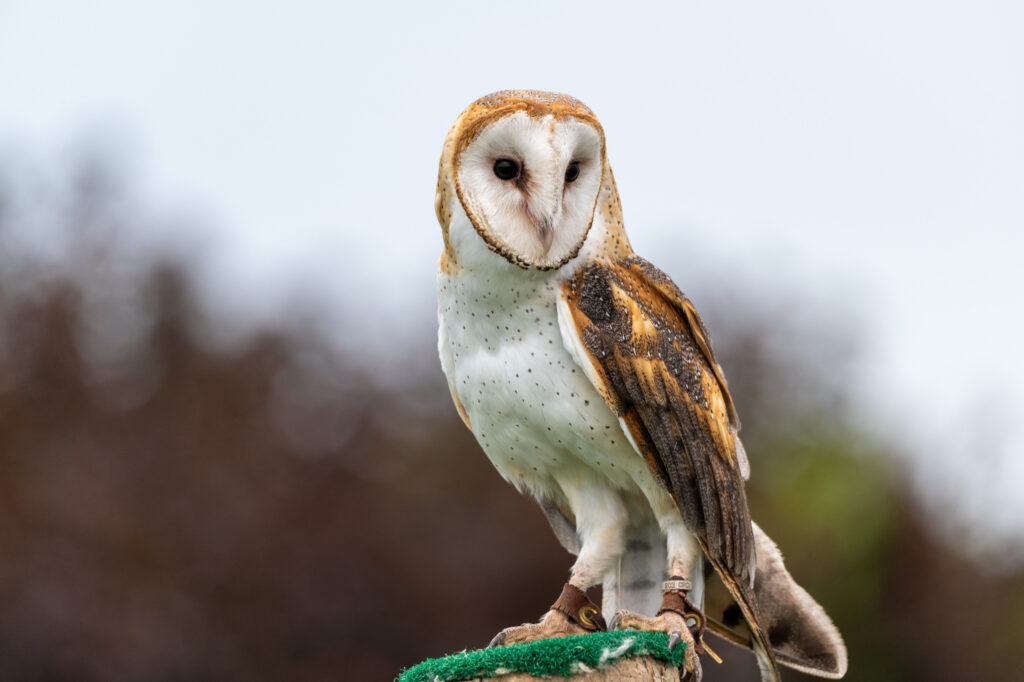
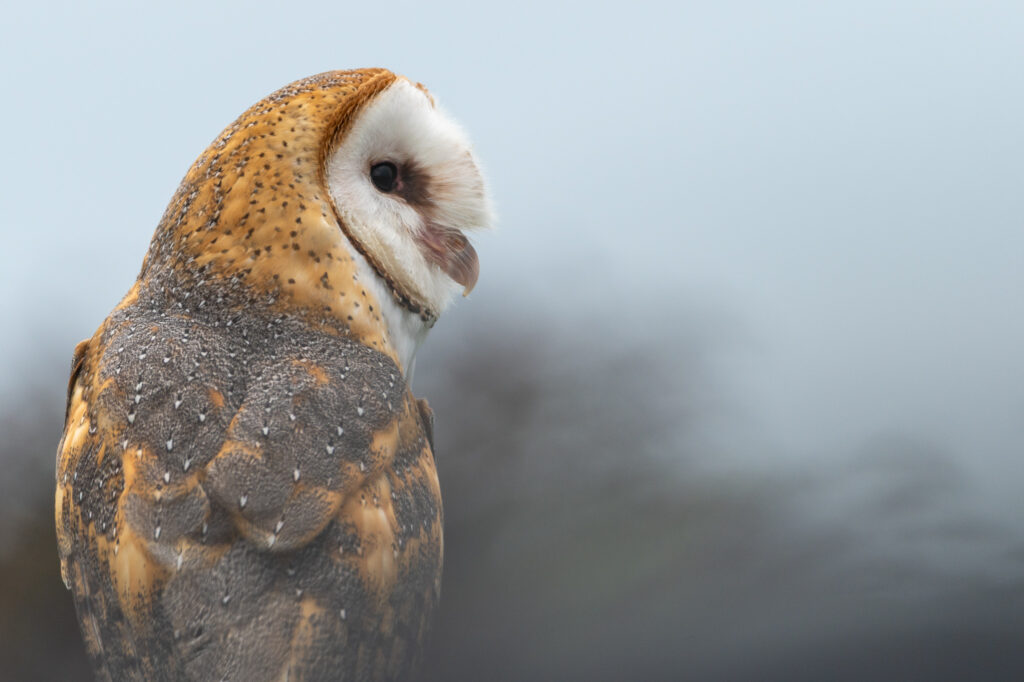
The next bird was one I don’t think I’ve ever seen in person before — a barn owl (Tyto alba). For once I understood some of the narrative, if only because I’d learned it after seeing owls on the wildflower walks back in June: in French, there are two words for what we in English call an “owl.” There’s la chouette and le hibou. Since one word is feminine and the other masculine, it’d be easy to assume that it depends on the bird’s sex. Well, anyway, that’s what I assumed. But no! A chouette is any variety of owl without visible feather tufts that look like ears, while a hibou has visible “ear” tufts.
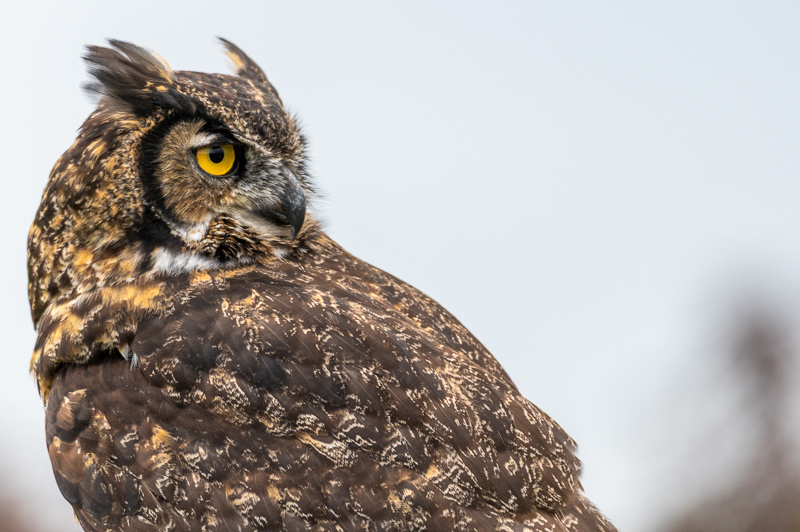
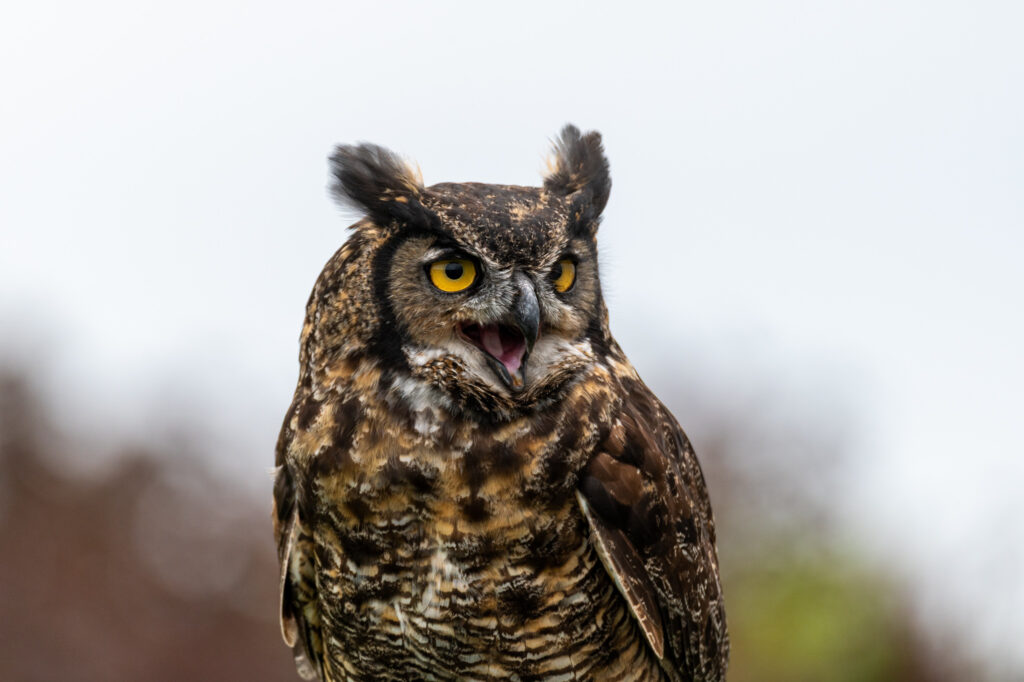
After the chouette came the hibou — in this case, a great horned owl (Bubo virginianus).
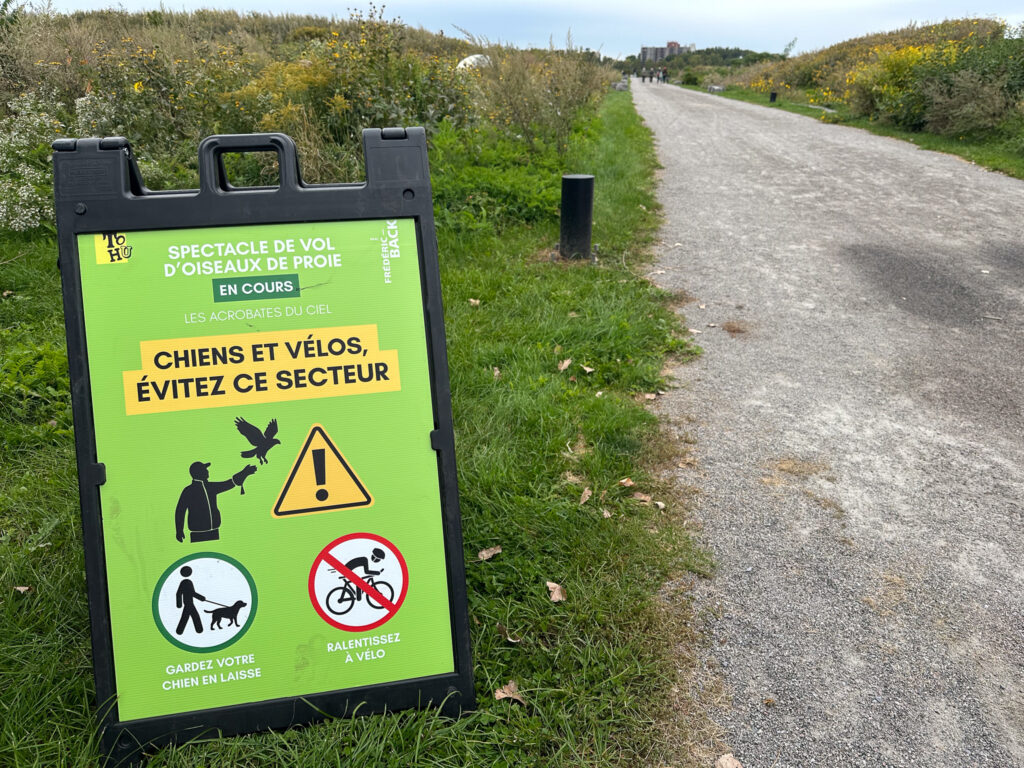
But with the hibou came unexpected drama. Up top, I have a picture of the sign banning dogs and bicycles from the area surrounding the performance. Both are banned to avoid disruption and spooking the birds. They forgot to translate the sign into raptor-ese and exclude native wildlife!
While the owl was on a post eating a snack, there was a scream from the heavens. In dove a wild hawk who was very not happy about the owl’s presence.
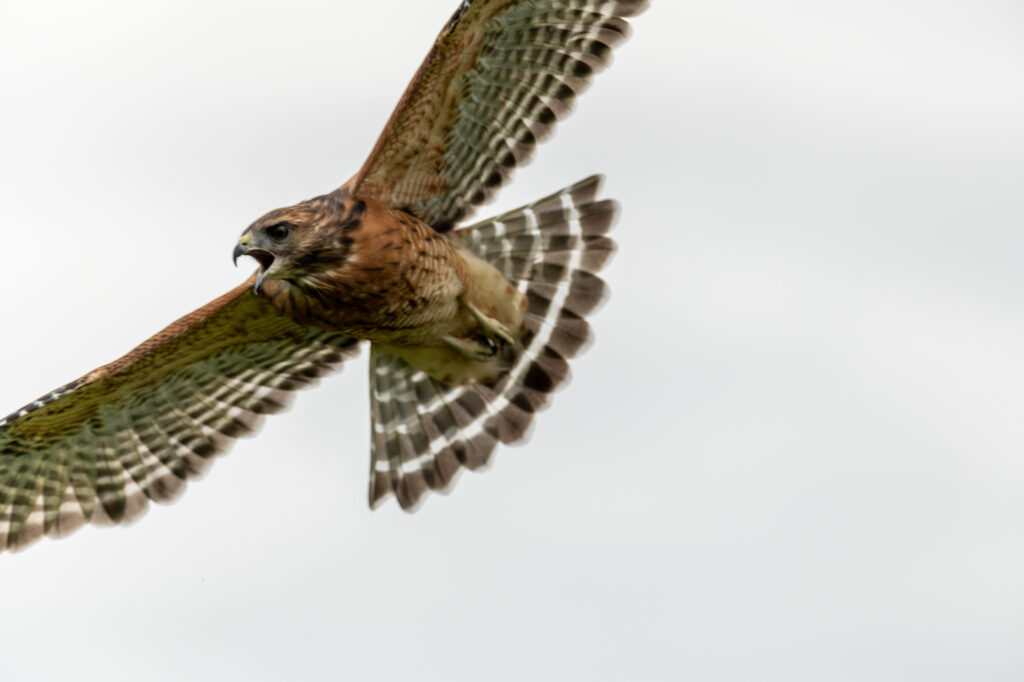
While the handlers stepped in and tried to get the agitated owl back to safety in its box, the hawk swooped and screamed. This, in turn, attracted the attention of the local wild crows, who were very unhappy about the hawk. So they started mobbing the hawk!
There was a dramatic and noisy aerial combat show that went on for what felt like a long time.
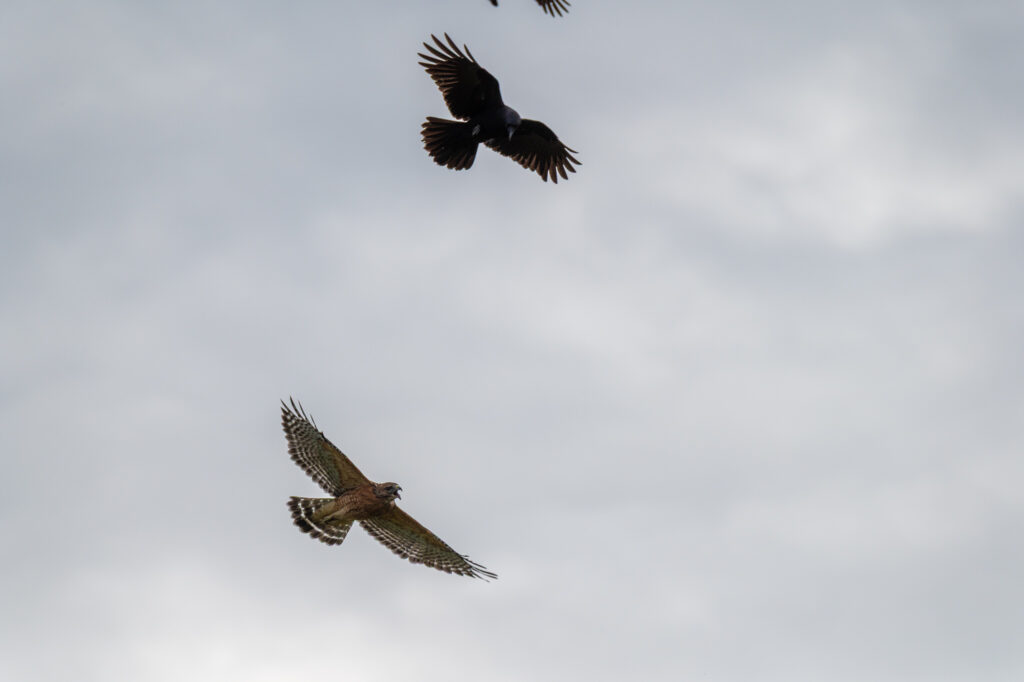
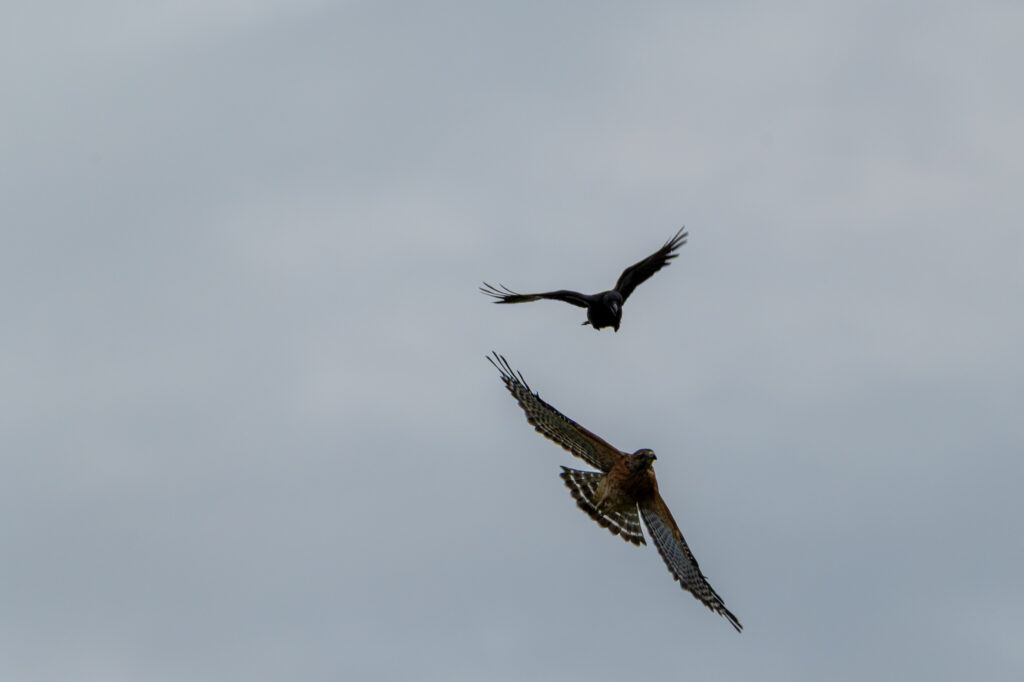
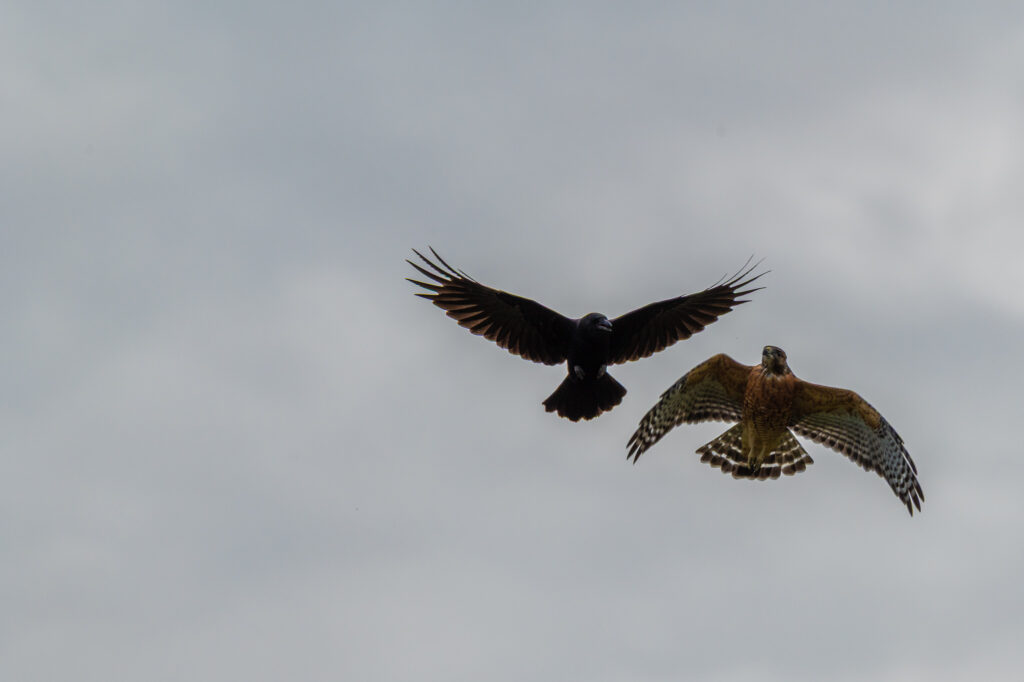
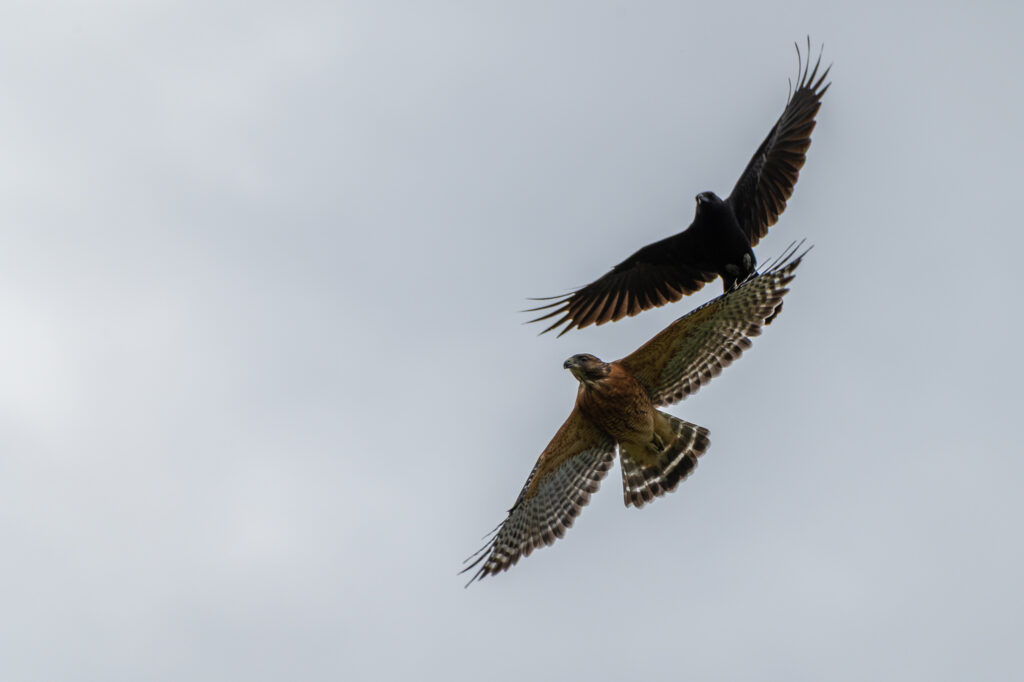
Eventually, the wild hawk left the area, the crows also headed off to roost on a distant fence, cawing in satisfaction.
Once calm and order were restored, the handler brought out the horned owl again, and walked around with it. It didn’t seem any worse for wear.
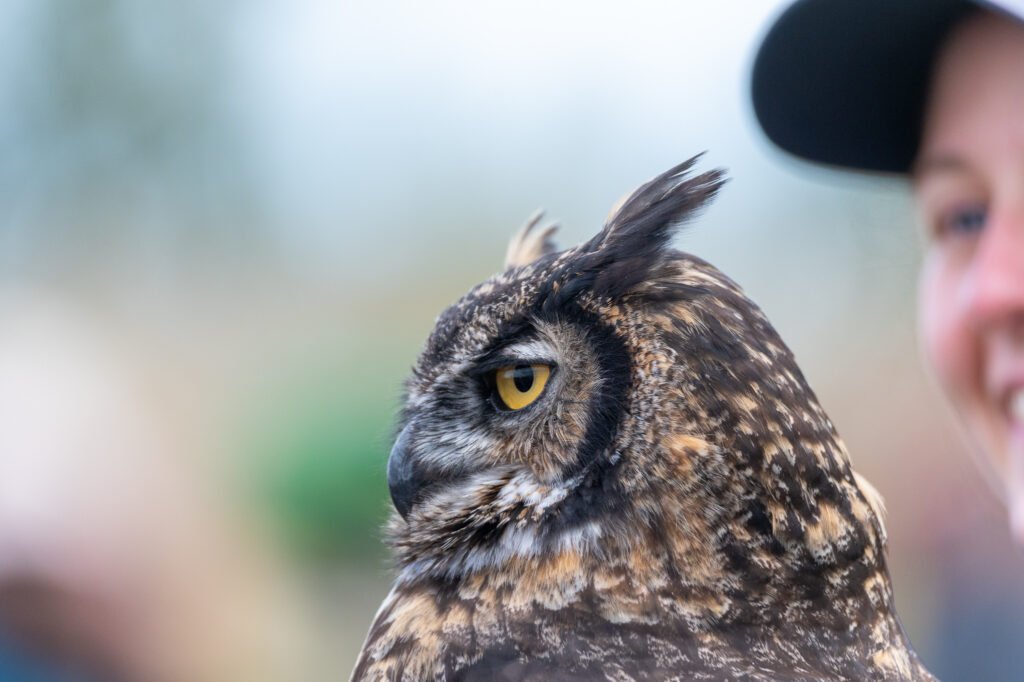
So the show was full of amazing birds and unplanned drama.
Like the circus performances (ok, I really will have to post separately on those), we were impressed that the city and the various organizations put aside funds for the presentation. It made for an exciting and interesting morning for a lot of people, and in a time when budget constraints are bumping up against all sorts of social problems, it’s nice for us that there are still some of these less tangible quality-of-life events. I personally would trade a handful of additional potholes in the streets for this kind of thing, although given the housing crisis would I trade this for an extra bed in a homeless shelter? It’s a complicated algebra, and I’m frankly glad that I’m not the one who has to make that kind of decision.
I also wonder about the ethics of bird shows. My first thought was to read up a bit on falconry. It’s changed a lot through the ages, but still revolves around hunting. Today, people have to go through extensive training for many years to become a falconer, and agree to a code of ethics. Yet falconers explicitly exclude bird shows and captive breeding programs from their purview (and clearly disapprove very strongly of keeping birds of prey as “pets”).
In every state and province in the US and Canada, there are very strict laws regarding keeping birds of prey and their welfare. The show didn’t seem cruel, and the handlers definitely appeared to have a love for their birds. But is it fair to keep wild animals and make them perform for our entertainment (or education)? I don’t know enough to judge, but as much as I enjoyed the show, I do wonder if bird-of-prey exhibitions are an anachronism like circuses with performing elephants and lion tamers.