

Though–as I predicted—the Habs were spanked and eliminated from the NHL semi-finals last week, the Montreal women’s hockey team La Victoire brought home the PWHL championship Walter Cup.
The women of La Victoire were celebrated with a big parade here in Montreal this last weekend, though their winning streak received only a modicum of the Hab’s media coverage, as their games were often scheduled at the same times as the men’s. This was not well-received by many fans; one Victoire booster even held a sign during the Habs game showing the Victoire scores to the TV cameras.

In another ostensible showing of girl power, sex workers in Montreal went on strike during the F-1 Grand Prix weekend seeking worker recognition and better labor protections. F-1 is one of those international jet-setter events that attracts thousands of wealthy people who want to party; like the World Cup and Olympics, F-1 also creates hotspots for sex-work and human trafficking.
It is unknown whether the Montreal sexworkers accomplished anything with their strike–if they did strike, we haven’t seen any follow-ups in the press about sexworker solidarity or disappointed racing fans. If nothing else, the publicity beforehand called a lot of attention to their cause.
But even as women are being celebrated for winning championships and flexing for better labor conditions, their status in Quebec is fraught. Though the provincial Charter of Human Rights and Freedoms declares that men and women are equal–equality is expressly stated in the law, unlike *other* places I could mention–the law only makes women equal on paper. Even when women are shown to be powerful, they are still subject to cultural humiliations and physical dangers that the law does not preclude, and those dangers have been increasing in Quebec and across Canada.
It is a worrisome and frightening trend. This year in Quebec, where the murder rate is comparatively low, the majority of murders have been femicides. Intimate partner violence has always been a problem here but incidents are increasing, perhaps due to the proliferation of misogynist ideologies in public and social platforms.
Indigenous women are particularly vulnerable. They are not only murdered at higher rates, but their disappearances are rarely publicized or pursued with a rigor equal to those of White women.
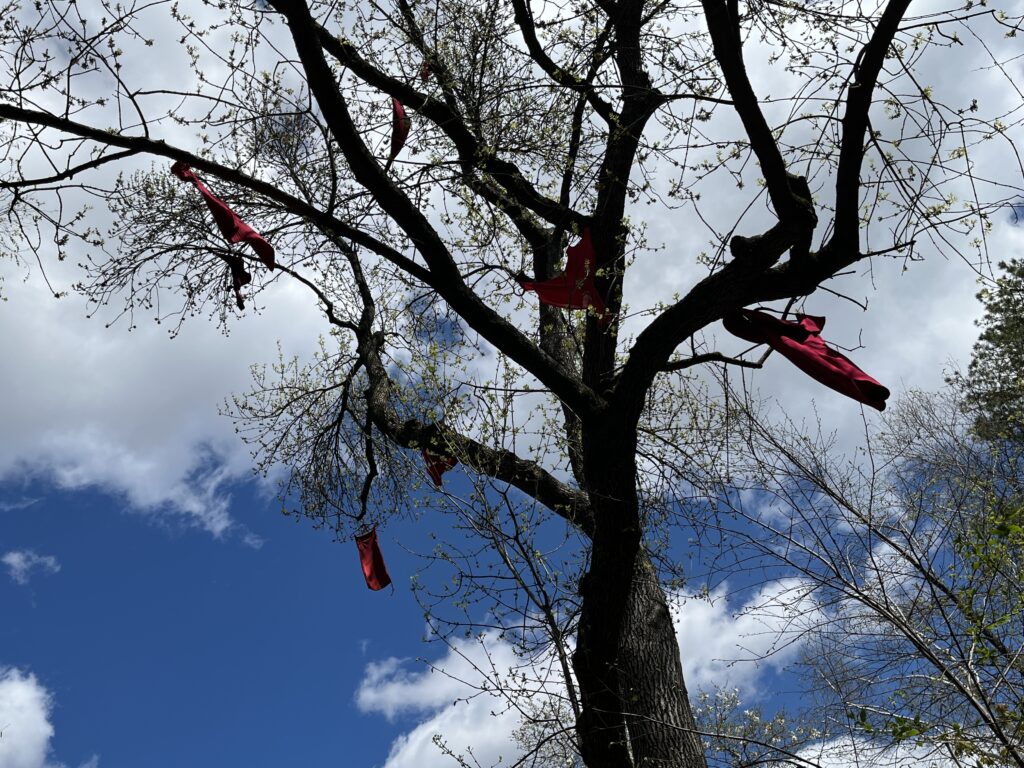
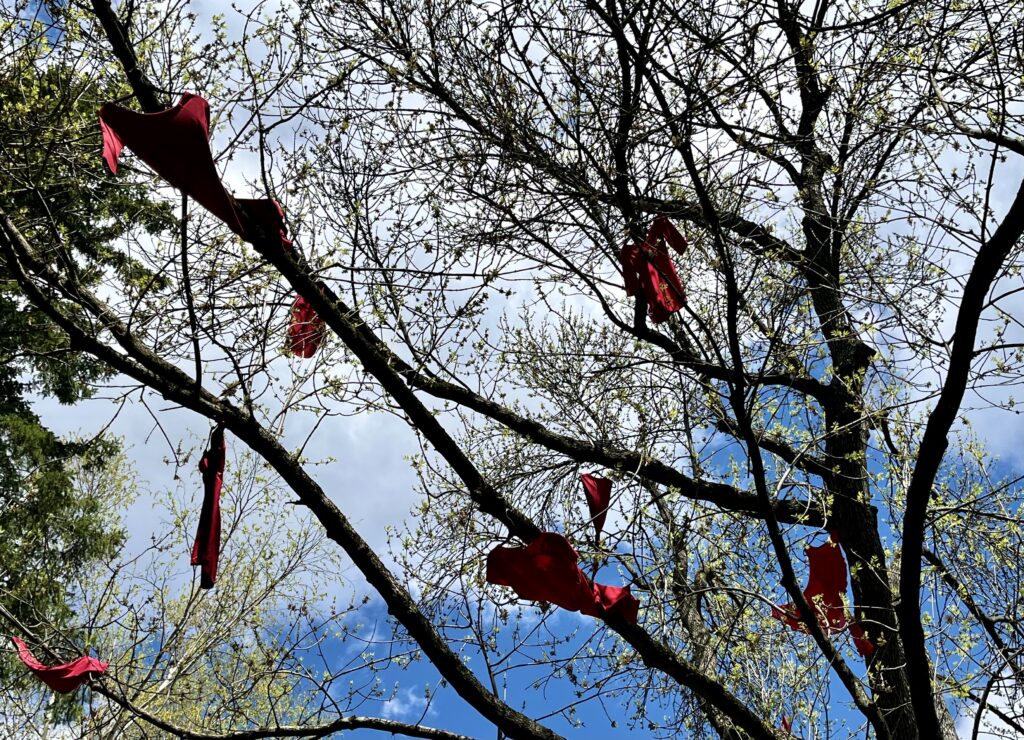
A couple weeks ago, Sylvain and I came across an installation by The Red Dress Project, an art and awareness campaign that features red dresses symbolizing the spirits of the many Indigenous women lost to violence and femicide. Floating above the ground, caught in the branches between earth and sky, the red dresses are an affecting reminder of those who have been vanished, disrespected in life and in death, treated as disposable by a diffident, racist society.
May was a big month for girl power on the legal front. The Supreme Court of Canada granted women the right to sue for damages after suffering intimate partner violence, and Quebec introduced a bill that would allow women access to their partners’ criminal records of domestic violence or abuse.
The Quebec proposal seems a bit backwards–wouldn’t it protect women better if they could access criminal records *before* they end up involved with violent men?–but as we have seen in other courts around the world, preserving the privacy of male abusers is considered more important than the lives and safety of women and their children.
The stark contrast of these stories about Canadian women–triumphs, struggles, and horrifying murders–is heart-rending. No matter what they achieve, and regardless of well-intentioned laws, women are not valued enough to be kept safe in a culture that simultaneously praises and dehumanizes them.
On a lighter note, here’s a powerful local gal named Lisette who’s known to be a bit of a bore.
And this is our beautiful friend Iris, she lives down the street: